

 My Account

Introduction
Office insurance renewals have a habit of sneaking up. One minute you’re focused on projects, people, and cashflow—then suddenly you’ve got a renewal invitation, a deadline, and a list of questions you haven’t look…
If you own, manage, or invest in an office block, you’re responsible for more than just keeping tenants happy. You’re also responsible for the building itself, the safety of people using it, and the financial impact if something goes wrong.
That’s where office block insurance comes in. In the UK, this is usually arranged as a commercial property owners’ policy (sometimes packaged as a “block of flats/blocks policy” equivalent for commercial premises). It’s designed to protect the building owner (or the freeholder/landlord) rather than the tenant.
In this guide, we’ll walk through what a typical office block insurance policy covers, what it often doesn’t, and how to make sure you’re properly protected.
Office block insurance is a type of commercial property insurance built for multi-occupancy or single-occupancy office buildings. It typically covers:
The structure of the building
The landlord’s legal liabilities
Loss of rent or alternative accommodation costs if the building can’t be used
Optional extras such as terrorism, subsidence, and legal expenses
Policies vary by insurer, but most are built around a core “buildings” section with add-ons depending on the building type, location, and tenancy arrangements.
This is the foundation of most office block insurance policies.
Buildings insurance typically covers physical damage to the structure caused by insured events, including:
Fire and smoke damage
Lightning
Explosion
Storm and flood
Escape of water (e.g., burst pipes)
Impact damage (e.g., vehicle collision)
Vandalism or malicious damage
In most policies, “the building” includes more than just walls and a roof. It often includes:
Roofs, ceilings, floors, and internal walls
Windows, doors, and glazing
Permanent fixtures and fittings
Landlord-owned kitchens and toilets
Lifts, stairwells, and communal areas
Car parks, boundary walls, gates, and signage (sometimes by extension)
Plant and machinery that forms part of the building (e.g., fixed HVAC)
Office block buildings insurance is normally based on the reinstatement value (the cost to rebuild and restore), not the market value.
A typical reinstatement valuation should consider:
Demolition and site clearance
Professional fees (architects, surveyors, engineers)
Compliance upgrades required by current building regulations
Materials and labour cost inflation
Underinsuring the building can lead to reduced claim payments under the “average” clause.
If someone is injured or their property is damaged due to the building owner’s negligence, property owners’ liability cover can help.
A visitor slips on a wet floor in a communal corridor
Falling roof tiles damage a parked car
A handrail fails on a staircase and causes injury
Poor lighting contributes to an accident in a car park
Compensation awards or settlements
Legal defence costs
Claimant legal costs (where awarded)
Liability limits are commonly £2m, £5m, or £10m, depending on the building size and risk profile.
If the office block becomes uninhabitable following an insured event (like a fire or flood), you could lose rental income for months.
A typical office block policy can include loss of rent cover (sometimes called “rent receivable”).
Loss of rental income during repairs
Alternative accommodation costs (where the landlord is responsible)
Additional costs to reduce the interruption (depending on the wording)
The indemnity period is the maximum time the insurer will pay loss of rent. Common options are 12, 18, 24, or 36 months.
For larger office blocks, 12 months can be tight—especially if there are planning delays, specialist materials, or complex reinstatement works.
Subsidence can be a major risk in parts of the UK, particularly where soil conditions, nearby trees, or historic mining activity are factors.
Structural movement causing cracking or distortion
Repair costs to stabilise and reinstate the building
Higher excesses (often £1,000–£5,000+)
Exclusions for certain building types or locations
Strict conditions around maintenance and reporting
Escape of water is one of the most common causes of commercial property claims.
Damage caused by leaking or burst pipes
Repairs to affected areas
Many policies also offer trace and access cover, which helps pay for the cost of finding the source of a leak (e.g., opening floors or walls).
Office blocks can have:
Multiple kitchens and toilets
Complex pipework
Tenant alterations
That increases the chance of water damage spreading across floors and units.
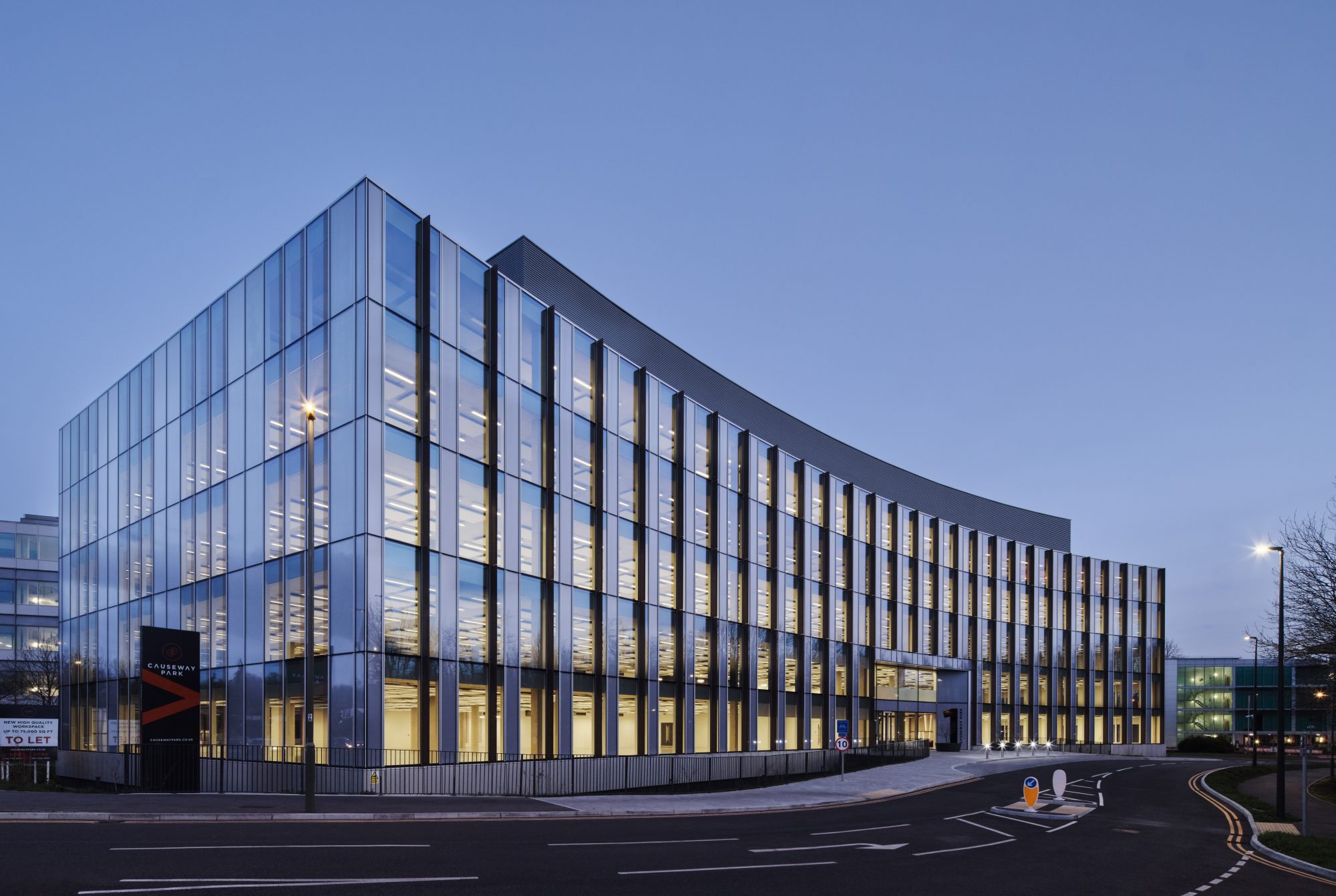
Office buildings often have significant glazing—especially modern blocks with curtain walling.
A typical policy may include:
Fixed glass and windows
Internal glass partitions (sometimes)
Shopfront-style glazing at reception
Some insurers treat large panes, specialist glass, or curtain walling differently, so it’s worth checking the wording and limits.
Office blocks can be targets for theft (especially of copper, plant equipment, or tools during refurbishments).
Typical cover can include:
Damage from forced entry
Theft of landlord-owned contents (if included)
Malicious damage to the building
Policies often require minimum security standards (locks, alarms, shutters) and may restrict cover if the building is unoccupied.
Buildings insurance covers the structure, but landlords may also need cover for items they own inside the building.
Examples include:
Reception furniture
Communal area furnishings
Landlord-owned appliances
Maintenance equipment
If tenants provide their own office furniture and IT equipment, that’s usually their responsibility under their own contents/business insurance.
If the building owner or managing agent employs staff—such as caretakers, cleaners, or maintenance personnel—you may need employers’ liability insurance.
In the UK, employers’ liability is a legal requirement for most employers.
This cover can help with:
Injury or illness claims from employees
Legal defence costs
Commercial legal expenses can be added to help with certain legal disputes.
Depending on the policy, it may help with:
Property disputes (e.g., boundaries)
Contract disputes (subject to terms)
Employment disputes (if you have staff)
Tax investigations (sometimes)
Always check what’s included and the claim triggers—legal expenses policies can be specific.
In the UK, terrorism cover is frequently arranged separately (often via Pool Re-backed schemes), though some insurers can include it.
Terrorism cover can protect against:
Physical damage from acts of terrorism
Loss of rent following terrorism-related damage
Whether you need it depends on the building location, tenant profile, lender requirements, and risk appetite.
If the office block is empty or partially empty, insurers may apply:
Higher excesses
Reduced perils (e.g., theft excluded)
Strict conditions (inspections, water drained down, alarms set)
If your building is undergoing refurbishment or between tenants, tell your broker/insurer. Standard cover may not apply if the property is classed as “unoccupied” under the policy definition.
Every insurer is different, but typical exclusions or limitations can include:
Wear and tear, gradual deterioration, and poor maintenance
Defective workmanship (though resulting damage may be covered)
Mechanical breakdown (unless engineering cover is added)
Pollution/contamination (often limited)
Cyber events affecting building systems (may require specialist cover)
War and nuclear risks
Damage due to flooding in high-risk zones (may be restricted)
Also look out for:
Policy excesses (especially for escape of water, subsidence, flood)
Single article limits on contents
Conditions precedent (security, inspections, maintenance)
Typically, the party responsible for the building under the lease arranges the insurance:
Freeholder/landlord
Property management company
Management company acting for multiple owners
Tenants usually insure their own:
Contents, stock, equipment
Tenant improvements (if required)
Employers’ liability and public liability for their operations
If leases require the landlord to insure and recover the premium via service charge, the policy should be suitable for the building and compliant with lease obligations.
When arranging office block insurance, it helps to prepare:
Reinstatement valuation (recent if possible)
Construction type (standard, non-standard, cladding details)
Number of floors and total square footage
Occupancy details (single tenant vs multi-let)
Tenant trade types (low-risk professional vs higher-risk uses)
Claims history
Security measures and fire protections
Any planned works, refurbishments, or change of use
A good broker will also check that the policy wording aligns with your lease requirements and lender expectations.
Usually no. Tenants typically insure their own office furniture, computers, stock, and equipment under a contents or business insurance policy.
Accidental damage is sometimes included, but often it’s an optional extension. It can be valuable for modern office blocks with high-value finishes.
Many office blocks have flat roofs. Cover is usually available, but insurers may ask about the roof condition, materials, and maintenance schedule.
Flood cover is commonly included, but high-risk postcodes may face higher excesses or restrictions. Insurers may request flood resilience measures.
Not automatically. If you have lifts or pressure systems, you may need engineering inspection and breakdown cover.
Yes—standard property owners’ cover may not be enough. You may need a policy extension or a specialist contract works/refurbishment policy, depending on the scope.
A typical office block insurance policy is designed to protect the building owner’s balance sheet—covering the structure, key liabilities, and the rental income that keeps the investment viable.
The right policy depends on how the building is used, who occupies it, and what risks exist in the location. If you’re unsure whether your current cover is adequate, it’s worth reviewing sums insured, lease obligations, and any policy conditions—before you need to claim.
Office insurance renewals have a habit of sneaking up. One minute you’re focused on projects, people, and cashflow—then suddenly you’ve got a renewal invitation, a deadline, and a list of questions you haven’t look…
Office building insurance is one of those things that feels “sorted” once the policy is in place—until a claim happens. Then the details matter: sums insured, the basis …
If you own, manage, or invest in an office block, you’ve probably seen premiums swing year to year even when you haven’t made a claim. That’s because office blocks …
Commercial property insurance can feel like its own language. Policies are full of terms that sound similar but mean very different things, and small wording differences …
Office insurance usually protects a business operating from an office—its contents, equipment, liabilities, and loss of income.
Office b…
On paper, a call centre can look like “just an office”: desks, computers, phones and people working indoors. In reality, call centres typically generate more f…
Tech companies often assume their main exposures are digital: cyber attacks, data breaches, and professional i…
Government and public sector buildings keep essential services running: council offices, libraries, leisure centres, schools, depots, museums, courts, job centres…
Medical office buildings (MOBs) sit in a unique space between “standard commercial property” and “healthcare premises&rdquo…
If you own a commercial building and lease it to a tenant, insurance is one of the fastest ways a “simple” tenancy can turn into a costly dispute. The lease mi…
Owning an office building can look straightforward: collect rent, manage repairs, and keep tenants happy. In reality, office landlords sit on a wide set of liability exposures that ca…
Office refurbishments can be a smart way to increase asset value, attract better tenants, and future-proof a building. But they also create a very real risk: lost rental income. W…
Loss of rent (sometimes called rental income cover) is designed to replace the rent you would have received if a property be…
Office insurance is designed to protect your business when something goes wrong: a burst pipe floods the premises, a small fire damages equipment, or a break-in results i…
If you’re a facilities manager, you sit at the intersection of people, property, compliance, and business continuity. When something goes wrong—fire, flood, escape o…
Owning an office building in the UK isn’t just about keeping tenants happy and maintaining rental income. It’s also about staying compliant with a wide ran…
Office buildings look low-risk compared to construction sites, but they’re full of hidden exposures. You’ve got multiple tenants, shared areas, visitors, IT infrast…
A Building Management System (BMS) is the “brain” that monitors and controls key building services such as heating, vent…
Learn the most overlooked server room risks building owners face, from fire and water damage to cyber, power, HVAC, and liability—and how insurance can respond.
In an office building, HVAC isn’t just about comfort—it’s a critical system that protects people, property and productivity. When heating, ventilation and air c…
If you own, manage, or maintain a building with a lift (elevator) or escalator, you’re responsible for keeping that equipment safe—and for managing the financial…
Serviced offices (and flexible workspace operators) sit in a tricky middle ground. You’re not a traditional landlord, and you’re not simply a tenant either. You may cont…
Not all office tenants look the same to an insurer. Two businesses can occupy identical space in the same building, pay similar rent, and have similar headcount—yet attract very di…
A vacant office building can feel like a “quiet win” — fewer people on site, fewer day-to-day issues, and time to plan the next move. But from an insurer…
Multi-tenant office buildings are complex risks. You may have a freeholder, a managing agent, multiple commercial tenants, contractors, visitors, shared services, and …
Office buildings face very different risks depending on the season. In winter, freezing temperatures, storms and shorter daylight hours can increase the likelihood …
A fire in an office can escalate fast: smoke spreads, visibility drops, alarms create panic, and a small incident can become a serious injury claim or a major business in…
If you manage an office, you’ve probably noticed how much more glass is involved in day-to-day operations than even a decade ago: full-height glazed entrances, glass partitions, meeti…
If you manage, own, or insure an office block, you’ve probably heard the phrase “escape of water” used like a warning label. It sounds simple—w…
Office fires are rarer than they used to be, but when they happen the impact can be severe: injuries, business interruption, data loss, reputational damage, and regulatory scrutiny. The…
Service charges are a fact of life for many commercial and residential landlords—especially where buildings have shared areas, multiple occupiers, or managing agents…
Underinsurance is one of the most expensive surprises in commercial property claims. It happens when the declared value on your policy is lower than the true cost to re…
If you insure an office block, the “rebuild cost” (also called the reinstatement cost) is one of the most important numbers on your policy. Get it rig…
Office buildings feel “low risk” compared to sites like factories, pubs, or construction projects—but claims still happen all the time. In fact, offices combine …
If you own, manage, or invest in an office block, you’re responsible for more than just keeping tenants happy. You’re also responsible for the building itself, the safe…
UK office buildings are changing fast. Hybrid working has altered occupancy patterns, many landlords are refurbishing to meet ESG expectations, and building systems are more …