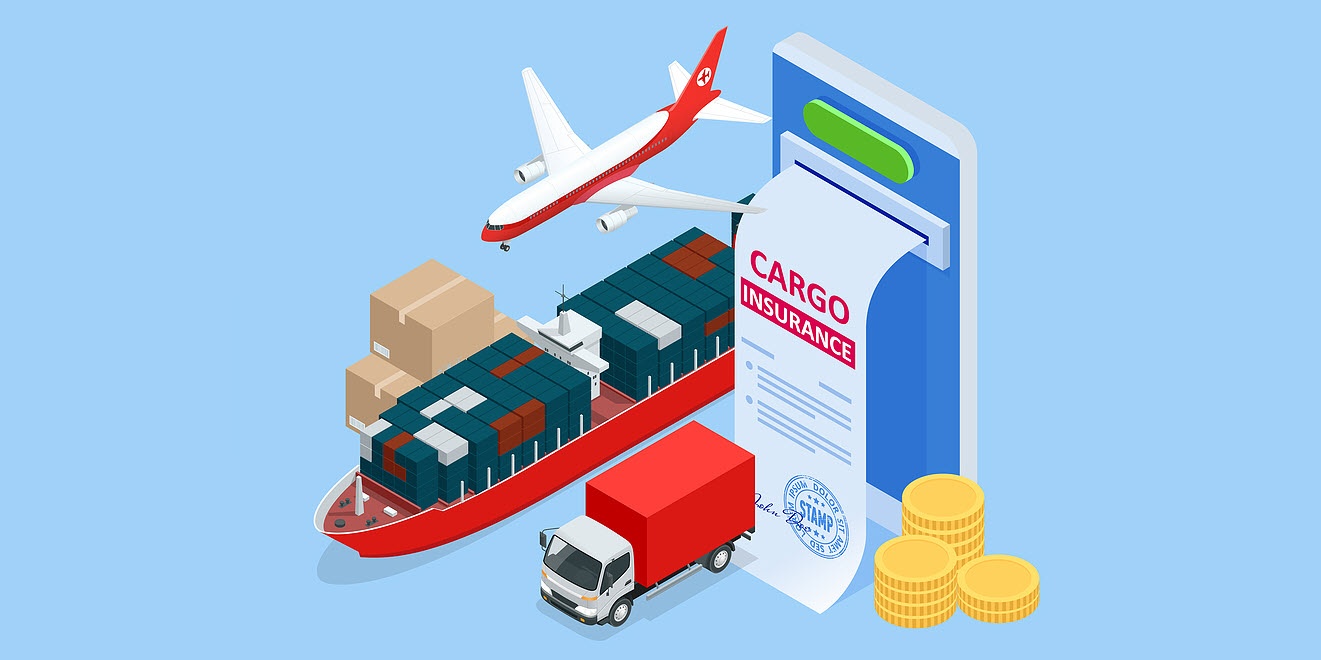
Cargo Insurance for Import/Export Businesses: A Practical UK Guide
Importing and exporting is all about timing, trust, and tight margins. One delayed container, one damaged pallet, or one missing carton can wipe out profit on a shipment — and, in some cases, strain customer relationships you’ve spent years building.
That’s where cargo insurance comes in. It’s designed to protect your goods (and often your cashflow) while they’re in transit by sea, air, road, rail, or a combination of all four.
This guide explains what cargo insurance is, what it covers, what it doesn’t, and how UK import/export businesses can choose the right policy.
What is cargo insurance?
Cargo insurance (often called marine cargo insurance) is cover for goods while they are being transported. Despite the name, it’s not just for sea freight. It can cover:
-
Sea freight (containers, breakbulk, RoRo)
-
Air freight
-
Road haulage (UK and international)
-
Rail freight
-
Multimodal shipments (e.g., road to port, sea crossing, then road to final destination)
Cargo insurance can be arranged:
For import/export businesses shipping regularly, annual cover is often more efficient and reduces the risk of forgetting to insure a shipment.
Why import/export businesses need cargo insurance
Many businesses assume the carrier will “cover it” if something goes wrong. In reality, carriers’ liability is usually limited by international conventions and contract terms, and it may not reflect the full value of your goods.
Cargo insurance helps protect against:
-
Damage in transit (impact, crushing, water ingress)
-
Theft and pilferage
-
Loss overboard or total loss of a container
-
Fire, explosion, and major incidents
-
General average contributions (common in sea freight)
-
Delays and knock-on costs (in limited circumstances, depending on wording)
It’s also a commercial credibility tool. If you supply retailers, manufacturers, or public sector buyers, they may expect you to have robust transit cover in place.
What does cargo insurance typically cover?
Cargo insurance is usually arranged on one of the Institute Cargo Clauses (ICC). The most common are:
-
ICC (A): “All risks” (broadest cover, subject to exclusions)
-
ICC (B): Named perils (mid-level)
-
ICC (C): Named perils (basic)
“All risks” doesn’t mean everything. It means cover is broad, but exclusions still apply.
Common insured events
Depending on the clause and policy wording, cover may include:
-
Accidental damage during loading/unloading
-
Collision, overturning, derailment
-
Fire and explosion
-
Heavy weather and seawater damage
-
Theft, non-delivery, and pilferage (often stronger under ICC A)
-
Container loss, sinking, stranding, grounding
-
Jettison (cargo thrown overboard)
The “warehouse to warehouse” principle
Most cargo policies are designed to cover goods from the moment they leave the seller’s warehouse (or your warehouse) until they arrive at the final destination warehouse.
This matters because many losses happen:
Always check whether your policy is genuinely warehouse-to-warehouse and whether there are time limits once goods arrive at port or destination.
What cargo insurance usually does NOT cover
Cargo insurance has exclusions that can catch importers/exporters out. Typical exclusions include:
-
Inherent vice (goods spoiling due to their nature, e.g., inadequate temperature control unless specifically covered)
-
Insufficient packing (if packaging is not suitable for the journey)
-
Ordinary leakage / wear and tear
-
Delay (unless specifically included; often excluded)
-
Financial loss only (e.g., loss of market)
-
War and strikes (often available as optional extensions)
If you ship temperature-sensitive goods, fragile items, or high-theft products, you’ll want to discuss specialist extensions.
Who should insure the cargo? Importer or exporter?
This depends heavily on your Incoterms (the trade terms in your contract). Incoterms define who is responsible for transport, risk, and insurance at each stage.
Common examples:
-
EXW (Ex Works): Buyer takes risk early; importer often needs cover from the seller’s premises.
-
FOB (Free On Board): Risk transfers once goods are on board the vessel; buyer typically insures the sea leg.
-
CIF (Cost, Insurance and Freight): Seller arranges insurance to destination port (but the level of cover may be minimal).
-
DAP/DDP: Seller carries more risk to destination; exporter may need broader cover.
A frequent problem: the party “responsible” for insurance arranges the cheapest possible cover, leaving gaps. If you rely on a supplier’s CIF insurance, ask for the certificate and check the clause (A/B/C), limits, and exclusions.
Single shipment vs annual cargo (open cover)
Single shipment (one-off)
Best for:
-
Occasional importers/exporters
-
High-value, unusual shipments
-
Trial runs with new suppliers or routes
Pros:
Cons:
Annual cargo / open cover
Best for:
-
Regular import/export operations
-
Multiple suppliers, routes, and carriers
Pros:
-
Continuous cover for declared shipments
-
Often better pricing per shipment
-
Reduced admin and fewer gaps
Cons:
If you ship weekly or monthly, annual cover is usually the safer operational choice.
Key factors that affect cargo insurance pricing
Premium is based on risk. Insurers will look at:
-
Type of goods (fragile, high theft, hazardous)
-
Packing method (palletised, crated, containerised)
-
Transit method (sea/air/road/rail)
-
Routes and territories (including theft hotspots)
-
Claims history
-
Shipment values and annual turnover
-
Security and logistics controls (sealed containers, tracking, vetted hauliers)
A broker can often reduce cost by improving presentation: clear packing standards, carrier selection criteria, and documented processes.
Common cargo risks for import/export businesses (and how to reduce them)
Cargo insurance is a financial backstop — but good risk management can reduce both claims and premiums.
1) Packaging and stowage failures
Damage often happens because goods move inside cartons, pallets collapse, or moisture protection is inadequate.
Risk controls:
-
Use export-grade packaging
-
Add corner protection and strapping
-
Use desiccants and moisture barriers for sea freight
-
Photograph packing and sealing
2) Theft and pilferage
High-value goods (electronics, branded items, alcohol, cosmetics) are attractive targets.
Risk controls:
3) Water damage
Sea freight is especially exposed to condensation and seawater ingress.
Risk controls:
-
Container inspection before loading
-
Moisture control (liners, desiccants)
-
Elevate goods off container floor where possible
4) Documentation errors
Incorrect descriptions, values, or Incoterms can cause disputes and delays.
Risk controls:
-
Standardise shipping documentation
-
Keep invoices, packing lists, and bills of lading aligned
-
Maintain a shipment register for declarations
Claims: what to do when something goes wrong
The difference between a smooth claim and a painful one is usually documentation and speed.
If you discover loss or damage:
-
Mitigate further loss (secure goods, stop water ingress, separate damaged stock)
-
Notify the carrier immediately and note damage on delivery documents
-
Take photos and video (packaging, seals, container condition, damage)
-
Keep all packaging and damaged items for inspection
-
Request a survey if required (especially for sea freight)
-
Notify your insurer/broker promptly
Also keep evidence of:
Cargo insurance vs freight forwarder “standard cover”
Freight forwarders sometimes offer “insurance” as an add-on. This can be useful, but it’s not always equivalent to a dedicated cargo policy.
Potential limitations:
-
Lower limits
-
Narrower cover (e.g., named perils)
-
Less control over wording
-
Claims handled through the forwarder’s process
For businesses where cargo value is material to cashflow, a standalone cargo policy is often a better fit.
How much should you insure for? (The insured value)
Cargo policies often insure on a basis such as:
The right insured value depends on your contracts and how you’d recover after a loss. Under-insuring can lead to reduced claim payments.
Add-ons and extensions worth considering
Depending on your trade, you may want:
-
War risks extension
-
Strikes, riots and civil commotions extension
-
Refrigeration breakdown / temperature deviation cover
-
Exhibition and storage extensions
-
High-value / high-theft goods clauses
-
Seller’s interest cover (if you may still be at risk after title passes)
A good broker will match extensions to your Incoterms, routes, and goods.
Choosing the right cargo insurance policy: a quick checklist
Before you buy, make sure you can answer:
-
What Incoterms do we use most often?
-
Who is responsible for insurance at each stage?
-
What’s our maximum shipment value?
-
Do we ship fragile, perishable, or theft-attractive goods?
-
Do we need warehouse-to-warehouse including the last mile?
-
Do we need cover for returns, samples, or replacement shipments?
-
Do we need temperature deviation or specialist handling cover?
If you’re unsure, start by mapping your typical journey end-to-end. Most coverage gaps come from assumptions about where responsibility starts and ends.
Frequently asked questions (FAQs)
Is cargo insurance legally required in the UK?
Cargo insurance is not usually a legal requirement, but it may be required by contract (with customers, suppliers, or finance providers) or by your own risk policy.
Does cargo insurance cover customs delays?
Typically, delay is excluded. Some policies may offer limited cover for specific additional costs, but it’s not standard.
Does cargo insurance cover theft from a vehicle?
Often yes under broader clauses (like ICC A), but insurers may require certain security conditions, especially for high-value goods.
What’s the difference between marine cargo and goods in transit insurance?
They’re closely related. “Marine cargo” often refers to international and sea-based transit, while “goods in transit” is sometimes used for domestic road transit. Many policies can be structured to cover both.
If my supplier ships CIF, am I covered?
Maybe — but CIF insurance can be minimal. Ask for the insurance certificate and check the clause, limits, and exclusions.
What is general average and why does it matter?
General average is a principle in maritime law where all cargo owners share certain losses if a sacrifice is made to save the voyage (e.g., cargo jettisoned during a storm). Cargo insurance can cover your contribution.
Final thoughts: protect the shipment, protect the relationship
Import/export businesses run on reliability. Cargo insurance isn’t just about replacing stock — it’s about protecting delivery promises, customer relationships, and cashflow.
If you ship regularly, have high-value goods, or operate on tight margins, it’s worth reviewing your Incoterms, your logistics chain, and your current insurance arrangements to ensure you’re not relying on limited carrier liability.
If you’d like, share what you ship (type of goods), your typical Incoterms (EXW/FOB/CIF/DDP etc.), and your main routes, and I can help you shape a version of this blog that targets your exact niche and keywords.


 My Account