

 My Account





Complete Guide to Plant Hire Insurance: Protecting Your Equipment Rental Business
The plant hire industry forms the backbone of construction, infrastructure, and development projects across the UK. From excavators and cranes to…






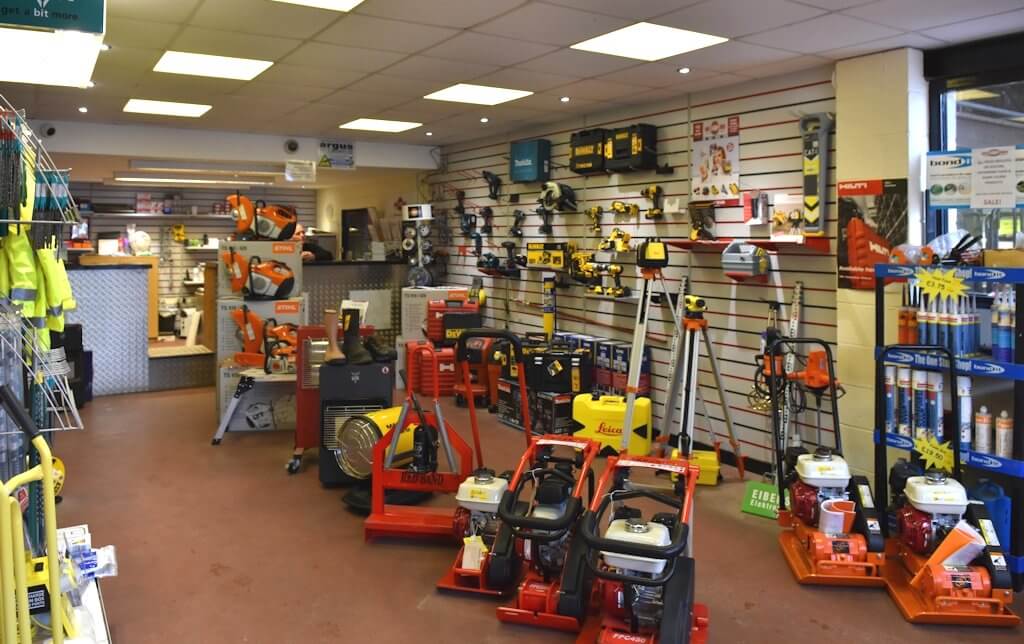
Plant hire and tool shop operations are hands-on: loading and unloading machinery, handling heavy tools, maintaining equipment, working in yards, servicing engines, moving stock, and dealing with busy trade counters. Even with strong health & safety controls, accidents can happen - and when they do, the cost of a claim can be significant.
Employers’ Liability (EL) Insurance helps protect your business if an employee (or labour-only worker) claims that they were injured or became ill due to their work for you. It typically covers legal defence costs and compensation awards, subject to policy terms.
In the UK, EL insurance is a legal requirement for most businesses that employ staff - including many plant hire shops, depots, equipment retailers, repair workshops, and delivery teams.
Employers’ liability insurance is designed to respond when a staff member alleges that your business caused, contributed to, or failed to prevent an injury or occupational illness. For plant hire shops, common claim triggers include manual handling injuries, slips and trips, loading incidents, and workshop accidents.
Employers’ liability claims often come down to everyday operational tasks. The best EL policy is one that reflects the real work your team does - from yard duties to shop-floor handling and maintenance.
In most cases, UK employers’ liability insurance must provide a minimum level of cover and be issued by an authorised insurer. Many insurers and contracts in the plant hire supply chain also expect higher limits due to the nature of the work and the potential severity of injuries.
Typical EL limits you’ll see in the market include £5,000,000 (common minimum) and £10,000,000 for businesses with more staff, busier depots, heavy handling, or higher-risk workshop activity. If you supply equipment to larger contractors, you may also see contract terms that expect £10m.
The right limit depends on factors like: number of staff, duties performed, turnover, workshop activities, delivery fleet, past claims, and how closely your operations involve lifting and mechanical work.
Employers’ liability insurance is designed for people who work for you under your direction and control. In a plant hire shop, this can include a mix of full-time, part-time and seasonal staff - and in some cases labour-only contractors.
Many employers’ liability claims start as an incident report: a staff member strains their back lifting equipment, slips in the yard, or suffers an injury during maintenance. Sometimes the claim appears months later, especially where the injury worsens or is linked to repeated exposure.
With Insure24, we help you set up EL cover that matches your risk profile. If a claim arises, the insurer will typically:
Strong documentation - inductions, training logs, PPE records, equipment maintenance schedules, yard rules, and safe loading procedures - can make a real difference in the outcome of EL claims.
Employers’ liability premiums are driven by how likely injuries are, how severe they could be, and how well controlled your workplace risk is. Plant hire shops can vary significantly: a small tool counter with limited handling is different to a busy depot with a yard, workshop, delivery fleet and frequent loading.
If your staff operate forklifts or lifting equipment, insurers may ask about certification, maintenance regimes and traffic management. If staff test vibrating tools, you may be asked about exposure controls and monitoring.
Employers’ liability is often purchased as part of a broader package for plant hire shops and depots. Combining covers can be simpler to manage and can prevent gaps between policies.
Depending on your operation, you may also want to consider:
If you’re not sure what you need, we’ll help you build a sensible insurance “stack” that matches how your shop actually operates - without paying for irrelevant cover.
Employers’ liability isn’t just a tick-box policy - it needs to fit your staffing model, your premises, your workshop activity and your delivery routines. We help plant hire shops and tool stores arrange cover that’s compliant, practical and insurer-ready.
Getting the right employers’ liability policy is straightforward when you know what insurers need. We’ll usually ask about your team size, payroll, staff duties, workshop activity, and premises layout. From there, we can present options and help you choose the right limit and structure.
Is Employers’ Liability Insurance legally required in the UK?
What does Employers’ Liability Insurance cover?
Do I need Employers’ Liability if I only hire part-time or seasonal staff?
Are labour-only subcontractors covered?
What limit of Employers’ Liability do plant hire shops usually buy?
Does Employers’ Liability cover injuries in the yard or workshop?
Can Employers’ Liability be included in a combined plant hire policy?
How quickly can I arrange Employers’ Liability Insurance?
What information do I need for a quote?
The plant hire industry forms the backbone of construction, infrastructure, and development projects across the UK. From excavators and cranes to…
The plant hire industry forms the backbone of construction, infrastructure, and development projects across the UK. From excavators and cranes to sca…
The plant hire industry operates at the intersection of heavy machinery, construction sites, and environmental responsibility. From excavators working ne…
When plant hire companies take on construction projects, standard equipment insurance often falls short of providing adequate protection. Contract works insurance o…
In the competitive world of tool hire and small plant equipment rental, protecting your business against unforeseen risks isn't just advisable—it's essential. Whether you'…
The Lifting Operations and Lifting Equipment Regulations (LOLER) 1998 represent one of the most critical regulatory frameworks affecting plant hire businesses acros…
The plant hire industry forms the backbone of construction and infrastructure projects across the UK, with depot facilities serving as critical hubs for eq…
Protecting your plant hire business when machinery downtime threatens your revenue stream
In the plant hire industry, your equipme…
The plant hire industry forms the backbone of construction, infrastructure development, and countless commercial projects across the UK. From excavators and bul…
Published by Insure24 - Your trusted commercial insurance broker
The plant hire industry serves two distinct yet interconnected sectors: construction and agriculture. While both involve heavy ma…
The crane hire industry operates in one of the most challenging and high-risk envir…
Published by Insure24 - Your trusted commercial insurance broker
The plant hire industry forms th…
Published by Insure24 | Your Commercial Insurance Specialists
The self-d…
The plant hire industry has undergone a digital transformation in recent years, with fleet management systems becoming the backbone of modern equipment rental oper…
Essential coverage for excavator hire businesses operating heavy machinery in high-risk construction environments
The agricultural plant hire industry operates on a unique seasonal rhythm that presents distinct challenges and opportunities. As farming activities intensify during …
The demolition industry operates in one of the most hazardous environments in construction, where powerful machinery meets complex structural challenges. For dem…
The plant hire industry faces a persistent and costly threat that keeps business owners awake at night: equipment theft. With construction machinery and plant equipment representing significa…