

 My Account





Short Circuits & System Failure – Downstream Liability Explained
Introduction: why “downstream liability” matters
A short circuit is often treated as a simple technical fault: a component fails, a fuse blows, a board burns out, an…






High-reliability electrical and electronic components sit at the heart of modern industry. They control motion, manage power, protect people, and keep production lines, vehicles and infrastructure running. When your products are used in automotive systems, industrial automation, rail signalling, safety circuits, energy storage, charging infrastructure, robotics or heavy plant, the consequences of failure can be severe.
A minor tolerance issue, batch contamination, solder joint defect, insulation breakdown or firmware mismatch can cause downstream damage, emergency shutdowns, warranty claims, recall activity and contractual penalties. Standard “off-the-shelf” insurance often misses the complexity of OEM supply chains, safety-critical exposures, export jurisdictions and the strict contractual obligations commonly imposed by Tier 1 and Tier 2 customers. Insure24 arranges manufacturing insurance that reflects the reality of high-reliability production—quality, traceability, testing, compliance and contractual risk.
This specialist manufacturing insurance is built for businesses supplying components where performance is mission-critical. That includes (but is not limited to) manufacturers of control modules, PCB assemblies, sensors, relays, contactors, switchgear, power distribution components, wiring harnesses, high-voltage connectors, industrial power supplies, battery management subsystems, motor drives, safety interlocks, encoders and electrical sub-assemblies integrated into larger systems.
The goal is simple: protect your balance sheet, your contracts, and your ability to continue trading if a problem occurs—whether that is a product defect allegation, a supply chain disruption, a fire at your premises, a machinery breakdown event, or a major OEM recall.
Product liability is often the cornerstone cover for high-reliability manufacturing. Where your components are integrated into vehicles, machinery or infrastructure, a defect allegation can escalate quickly—especially if the customer claims you triggered a shutdown, damaged equipment, caused fire, or created a safety risk. In these scenarios, you need the right combination of limits, territories, contract conditions and evidence requirements.
Product recall cover is equally important for businesses supplying automotive and industrial chains. In the real world, a “recall” can mean far more than public consumer products—OEMs often initiate controlled withdrawals, rectification programmes, quarantine actions, rework campaigns, dealer bulletins, or batch swap-outs. The right policy structure can help protect against the cost of locating affected units, communicating with customers, shipping replacements, and handling disposal or rework.
High-reliability supply chains often have global distribution. Even if you manufacture in the UK, your components may be shipped into EU plants, US assembly facilities, or global OEM networks. You may also face contractual requirements for high liability limits (for example, £5m, £10m or more), and strict terms around vendor liability. We help you align policy territories, jurisdiction clauses and limits with the reality of where your products end up—and what your contracts actually demand.
Importantly, insurers want clear information about your quality systems and testing regime. The strongest underwriting outcomes usually come from a well-presented risk: documented QC checks, traceability, end-of-line testing, environmental testing (where applicable), supplier controls, and an incident response plan for defect allegations.
Many component manufacturers do more than “make to print”. You may advise customers on component selection, create bespoke assemblies, modify standard products, recommend substitutions during shortages, or collaborate on design validation and testing. When you influence design or specification, you can take on a form of professional exposure. If a customer alleges your design input contributed to failure, you may need Professional Indemnity (PI) or design liability protection alongside product liability.
Contractual risk is also a defining feature of automotive and industrial supply chains. OEM and Tier 1 contracts commonly include clauses for chargebacks, liquidated damages, expedited shipping costs, field service costs, warranty cost sharing, and penalties for late delivery. Insurance cannot always cover every contractual loss, but the right structure can help address insurable elements and support defence costs where liability is alleged.
If you supply into automotive or safety-critical industrial markets, insurers will ask about your contractual terms, your change-control process, and the limits of your responsibility. Being able to demonstrate documented engineering sign-off, deviation controls, concession processes, and clear product documentation helps improve underwriting confidence.
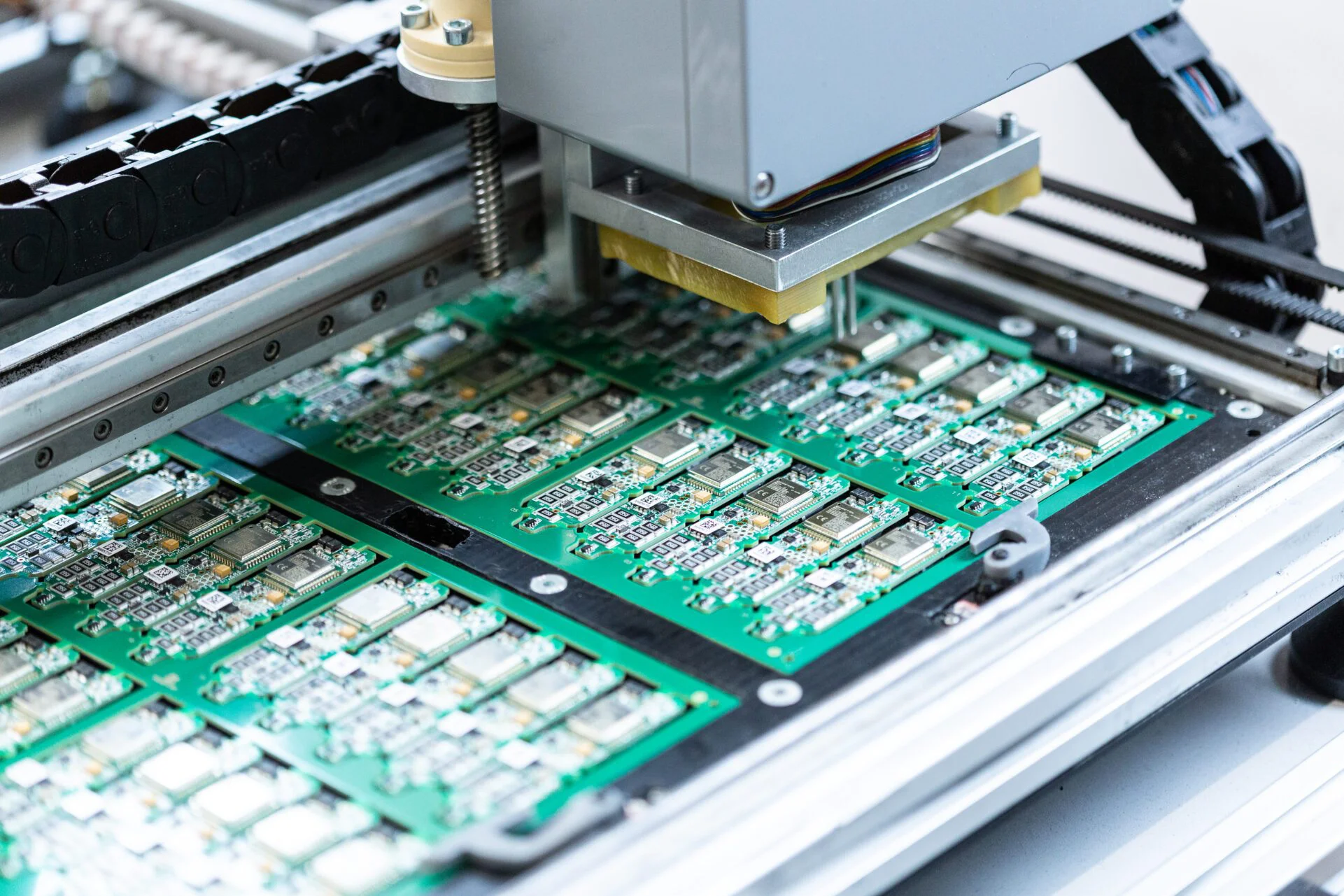
High-reliability manufacturing often depends on specialist equipment and controlled processes. A single failure—compressed air, extraction, ESD controls, test equipment, ovens, potting lines, conformal coating systems, SMT placement machines, wave soldering, selective soldering, AOI systems, ICT fixtures, calibration rigs—can cause immediate downtime and costly requalification work. The correct combination of property insurance, machinery breakdown (engineering) extensions and business interruption cover is critical.
We help ensure your sums insured reflect replacement costs, lead times, and the reality that specialist machines can take months to source and commission. Business interruption can then protect profit and continuing expenses while you recover.
When you supply automotive or industrial customers, recovery is not always just “replace the machine and start again”. You may need to revalidate processes, requalify batches, repeat environmental testing, and satisfy customer audit requirements before shipments resume. That can extend downtime significantly—so the indemnity period and the “increased cost of working” allowance should be aligned to the real time it takes to recover, not the optimistic time it takes to buy a replacement asset.
High-reliability underwriting is heavily influenced by quality management and traceability. Insurers want to know how you prevent defects, how you detect issues early, and how you respond if a problem arises. Strong quality systems don’t just reduce claims—they can materially improve terms, reduce premiums, and broaden available cover.
We help you present your quality framework clearly to underwriters, focusing on what matters: process controls, supplier management, testing regime, documentation, and the ability to isolate affected batches quickly.
Many businesses lose time and pay more than necessary because the insurance submission is vague or generic. High-reliability manufacturing submissions should clearly explain what you make, where it goes, what “failure” means in the context of your product, and what controls exist to prevent quality escapes. Insure24 specialises in presenting manufacturing risk properly, so underwriters can quote accurately and confidently.

Our customer required higher limits and proof of robust recall planning. Insure24 understood our testing and traceability, presented it clearly, and secured cover that satisfied a Tier 1 audit without overpaying.
Quality Manager, UK Automotive Electronics SupplierYou don’t need a generalist policy—you need a broker who understands OEM supply chains, contract requirements, technical exposure, and how underwriters view high-reliability manufacturing. Our focus is to get you the right cover, with the right limits and wording, at a competitive premium, by presenting your risk accurately.
High-reliability components frequently sit within regulated environments. Your insurance submission should reference the compliance frameworks you work to, because insurers view robust compliance as a risk reducer. Depending on your product and market, that can include electrical safety compliance, EMC, material declarations, environmental controls, functional safety obligations, and OEM-specific requirements.
We tailor cover around your compliance landscape, including export considerations where EU and non-EU regulations apply.
High-reliability manufacturing is underwritten on detail. The better we understand your products, markets and controls, the better the terms we can obtain. The process below is designed to gather the key underwriting information efficiently, without slowing you down.
The strongest high-reliability insurance outcomes come from risk-aware manufacturers. Insurers price risk based on severity potential and the likelihood of quality escapes. Demonstrating practical controls can unlock better terms and reduce the probability of catastrophic claims. Below are examples of controls that commonly strengthen underwriting confidence.
When a defect allegation arises, speed and documentation matter. Insurers and customers want clear evidence: what batch is affected, how it was tested, what the root cause is, and what corrective actions are in place. Keeping test logs, calibration records, supplier CoCs, traceability reports and corrective action documentation can make the difference between a contained incident and a prolonged dispute.
What counts as “high-reliability” components for insurance?
Do I need product recall cover if I don’t sell to consumers?
What liability limits do automotive and industrial customers usually require?
Do I need Professional Indemnity (PI) as well as product liability?
How do insurers assess my quality controls?
How quickly can I get a quote?
If you manufacture high-reliability automotive or industrial electrical components, talk to Insure24. We’ll help you put the right structure in place—product liability, recall, PI, property, breakdown and business interruption—so you can meet OEM requirements and protect your business when the unexpected happens.
CALL FOR EXPERT ADVICE
A short circuit is often treated as a simple technical fault: a component fails, a fuse blows, a board burns out, an…
Batch defects in electrical components can turn into expensive, fast-moving problems. One faulty run of connectors, PCBs, capacitors, relays, power supplies, chargers, s…
When a transformer or a piece of switchgear overheats, the damage can spread fast: smoke and fire risk, power loss, damaged plant, spoiled stock, and busi…
Component manufacturing sites often run high-load, high-heat processes with tight tolerances and long…
Printed circuit boards (PCBs) sit at the heart of most modern products — from industrial controls and EV chargers to medical devices and consumer electronics. When a PCB fail…
If you manufacture electrical products in the UK—anything from control panels and power supplies to consumer electronics—insurance isn’t just a &l…
Electrical components manufacturing sits at the sharp end of modern industry. Your products may end up in medical devices, EV charging, industrial controls, telecoms, consu…