What If a Caravan Fire Spreads Across Multiple Units?
Introduction
Caravan sites are built for holidays and downtime, but they’re also environments where a small incident can escalate quickly. Units are often close together, gas cylinders may be present, and wind can push flames from one caravan to the next in minutes. If a fire starts in one caravan and spreads across multiple units, the big questions come fast: Is everyone safe? Who is responsible? What does insurance cover? What evidence matters?
This guide explains, in plain English, what typically happens in the UK when a caravan fire spreads, how liability is assessed, and how to protect your position—whether you’re the caravan owner, a neighbour affected by the fire, or a site operator.
First priority: safety and emergency response
If you’re involved in or witnessing a caravan fire, the order of actions matters.
- Call 999 immediately and ask for the Fire and Rescue Service.
- Evacuate people first, including neighbouring units. Don’t try to “save belongings” if there’s any risk.
- If safe to do so, alert the site office/warden so they can trigger site procedures, isolate utilities, and manage evacuation.
- Do not re-enter any unit until the Fire and Rescue Service confirms it’s safe.
Even if the fire looks “contained”, caravan fires can re-ignite and smoke inhalation can be serious. The fact that the fire spread across units will almost always mean the incident is treated as significant.
Why caravan fires can spread so quickly
Understanding spread helps explain why insurers and investigators focus on certain details.
Common factors include:
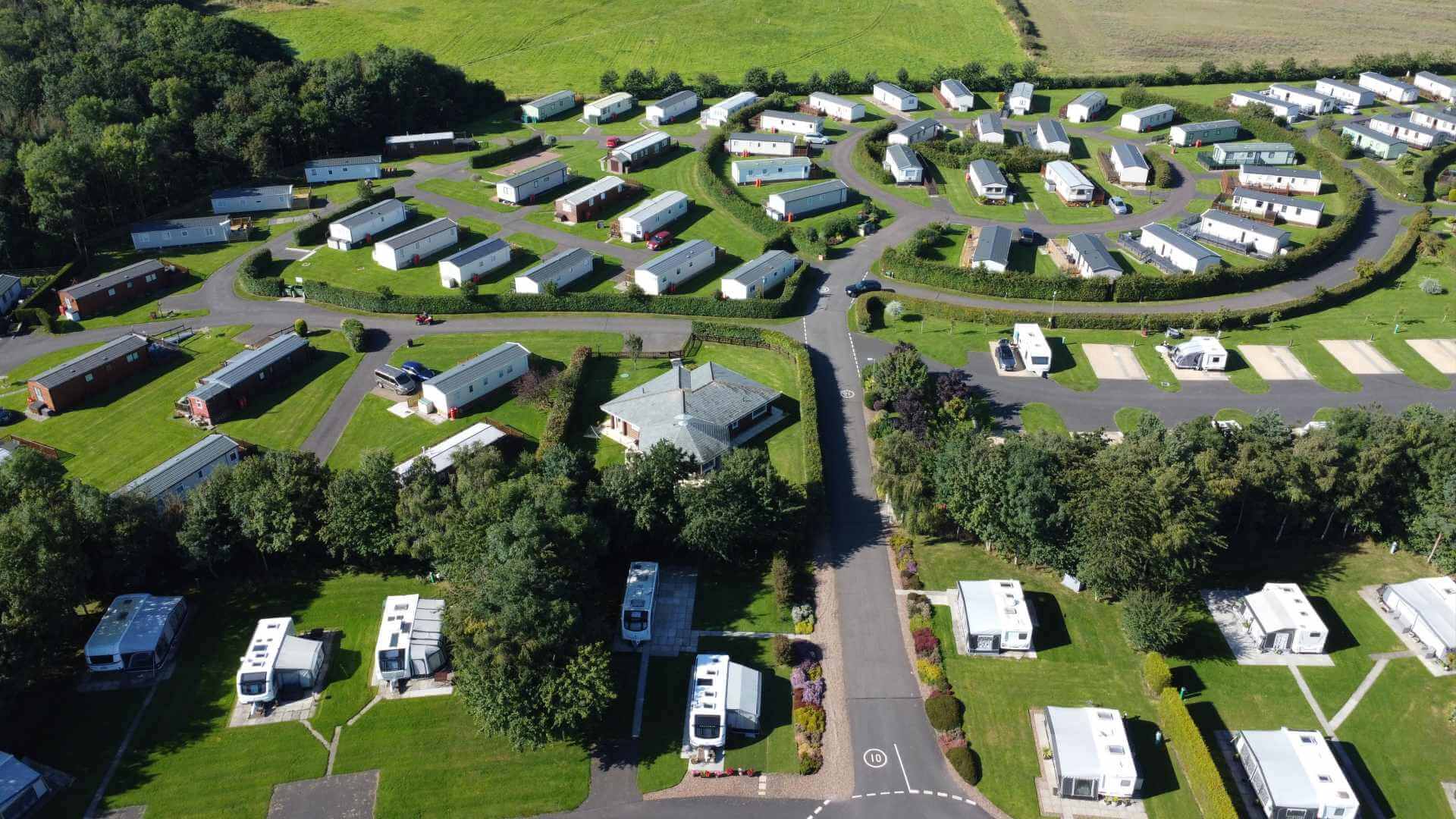
- Proximity and layout: Many pitches have limited separation distances. Heat and radiant energy can ignite nearby materials.
- Wind direction and speed: Wind can carry flames and embers to adjacent units.
- Combustible materials: Awnings, decking, cladding, and stored items (chairs, BBQs, fuel, gas cylinders) can accelerate spread.
- Gas and electrical systems: Faults, leaks, or damaged cabling can increase intensity.
- Delayed detection: Fires that start at night or when units are unoccupied can grow before anyone reacts.
This doesn’t automatically mean someone was “negligent”. But it does mean the investigation will look closely at cause, maintenance, and site rules.
What happens after the fire: the typical process
Once the immediate danger is over, there’s usually a sequence of steps.
- Fire and Rescue Service attendance and initial findings
- They may provide an incident number and, in some cases, a brief cause category (for example, accidental, electrical, cooking-related).
- Site operator actions
- Securing the area, isolating utilities, arranging temporary accommodation guidance, and documenting damage.
- Insurance notifications
- Multiple parties may need to notify insurers: the caravan owner where the fire started, neighbouring owners, the site operator, and sometimes contractors.
- Loss adjusters and investigators
- Insurers may appoint a loss adjuster. Where multiple units are involved, expect a more formal investigation.
- Evidence gathering and repair/settlement
- Claims may take longer because liability and contribution between insurers can be complex.
Who could be liable when the fire spreads?
Liability is not decided simply because “the fire started in your caravan”. In the UK, liability generally comes down to whether someone breached a duty of care and that breach caused the loss.
Potentially responsible parties can include:
1) The caravan owner or occupier
You might be alleged to be responsible if the fire was caused by something like:
- Unsafe use of heaters, cookers, candles, or smoking materials
- Faulty or poorly maintained appliances
- DIY electrical work or unapproved modifications
- Unsafe charging of e-bikes, mobility scooters, or lithium batteries
- Improper storage/handling of gas cylinders or flammable liquids
If you took reasonable care and the fire was genuinely accidental (for example, an unforeseeable electrical fault), liability may not attach—but insurers will still examine the facts.
2) A contractor or service provider
If a fire is linked to recent work—electrical repairs, gas servicing, installation of appliances, or maintenance—liability may sit with the contractor.
Key questions include:
- Were they qualified and appropriately certified?
- Was the work compliant and documented?
- Was the equipment installed to manufacturer guidance?
3) The site operator/park owner
Site operators can face allegations if the spread was made worse by site conditions or management, such as:
- Inadequate spacing or pitch layout
- Poor maintenance of communal electrical infrastructure
- Failure to enforce site rules on BBQs, fire pits, storage, or awnings
- Lack of clear emergency procedures or poor signage
This doesn’t mean the site operator is always liable—many sites have robust rules and procedures—but it can be part of the picture.
4) A manufacturer (less common)
If a product defect caused the fire (for example, a faulty appliance or battery), product liability may be explored. This usually requires expert evidence.
How insurers look at “cause” vs “spread”
Insurers often separate two issues:
- Cause of ignition: What started the fire?
- Extent of loss: Why did it spread and how far did it go?
Even if the ignition cause is unclear, insurers may still pay for your own damage under your own policy (depending on cover). But when multiple units are damaged, insurers will also look at recovery—trying to reclaim costs from whoever is legally responsible.
That’s why you may see:
- Your insurer paying you, then pursuing another insurer later
- Multiple loss adjusters on site
- Requests for documentation you didn’t expect (maintenance records, receipts, photos, site rules)
What insurance may apply (and where gaps happen)
Cover depends on the type of caravan and the policy wording, but these are the common areas.
Caravan insurance (your own unit)
A caravan policy may cover:
- Fire damage to the caravan itself
- Contents (if included)
- Awnings and annexes (sometimes optional)
- Debris removal (sometimes limited)
- Alternative accommodation (more common on some policies)
Key things that can affect payout:
- Sum insured adequacy: Underinsurance can reduce settlement.
- Security and occupancy conditions: Some policies have requirements when the caravan is left unattended.
- Maintenance and modifications: Unapproved changes can create disputes.
Public liability / third-party liability
This is the part many people don’t think about until it’s too late.
If you are found legally liable for damage to neighbouring units or injury to others, a liability section (if included) may respond. Some caravan policies include a level of public liability; sometimes liability is arranged via the site or a separate policy.
Questions to check:
- Does your policy include third-party liability?
- What is the limit of indemnity (for example, £2m, £5m)?
- Are there exclusions for certain activities (BBQs, gas appliances, business use)?
Site operator insurance
Park owners typically carry their own property and liability insurance. If the spread relates to site infrastructure or management, their policies may come into play.
Contents insurance and personal possessions
If your possessions were damaged (or smoke-damaged), you may claim under:
- Caravan contents cover (if included)
- Home contents insurance (sometimes extends to possessions away from home)
Always check policy terms before assuming there’s cover.
If your caravan didn’t start the fire but you’re affected
If your unit was damaged by a fire that started elsewhere, you may have two routes:
- Claim on your own policy (often faster, subject to excess)
- Pursue the responsible party (or their insurer) if liability is clear
In practice, many people claim on their own insurance first to get moving, then let insurers argue liability behind the scenes.
Evidence that helps (without putting yourself at risk)
After a multi-unit fire, evidence disappears quickly—through clean-up, weather, and necessary safety work. If it’s safe and permitted, gather what you can.
- Photos/video of the scene, including boundaries between units
- Time-stamped notes: when you noticed smoke, who you called, who attended
- Names/contact details of witnesses (neighbours, wardens)
- Any relevant receipts and service records (gas servicing, electrical work)
- A list of damaged items (contents inventory)
- Copies of site rules and your pitch agreement/licence
Important: do not interfere with the scene if the Fire and Rescue Service or police are involved. If in doubt, ask the site operator what is permitted.
Common claim pitfalls in multi-unit caravan fires
These are the issues that most often slow claims or create disputes.
1) Delayed notification
Notify your insurer as soon as practical. Multi-party incidents move quickly and early notification helps protect your position.
2) Unclear ownership and responsibility
Caravan sites can involve:
- Owner-occupied units
- Let units
- Seasonal pitches
- Sub-letting arrangements
Make sure the insurer knows who owned what, who was occupying the unit, and what agreements were in place.
3) Modifications and non-standard electrics
Extra sockets, heaters, chargers, and DIY work can become a focal point. If you’ve made changes, be honest and provide documentation.
4) Underinsurance
If your sum insured is below replacement value, insurers may reduce the payout proportionally. This is especially painful when a total loss occurs.
5) Debris removal and site clearance
Some policies cap debris removal. When multiple units are affected, clearance costs can rise fast.
What site operators should do (risk and reputation)
If you manage a caravan park, a multi-unit fire is both a safety event and a reputational event. Strong, calm communication matters.
Practical steps include:
- Confirming everyone is accounted for and offering support
- Securing the area and preventing unauthorised access
- Providing residents with a clear point of contact
- Documenting site actions and timelines
- Coordinating with emergency services and insurers
- Reviewing spacing, electrical infrastructure, and enforcement of rules
Even where the site isn’t at fault, good incident handling reduces disputes and helps residents recover faster.
How to reduce the risk of fire spreading between units
No one can remove risk entirely, but you can reduce both ignition risk and spread risk.
- Keep clear space around the caravan where site rules allow
- Store gas cylinders correctly and keep combustibles away from heat sources
- Use heaters and cooking equipment as intended; avoid overloaded extensions
- Be cautious with lithium battery charging; use manufacturer chargers and don’t charge unattended
- Maintain appliances and electrics; use qualified professionals
- Know site rules on BBQs, fire pits, and awnings
- Consider smoke alarms and fire extinguishers suitable for the environment
When to get advice
If multiple units are involved, it can be worth getting early guidance—especially if there are injuries, significant third-party losses, or any suggestion of negligence.
- Speak to your insurer and follow their process
- If liability is disputed, consider independent advice (legal or specialist claims support)
Quick checklist: what to do after a multi-unit caravan fire
- Ensure everyone is safe and call 999.
- Notify the site operator/warden.
- Seek medical help for smoke inhalation or shock.
- Notify your insurer(s) promptly.
- Document damage and gather witness details.
- Keep receipts for emergency costs.
- Don’t dispose of key items until insurers confirm.
Call to action
If you own a caravan, run a park, or let caravans to guests, it’s worth checking now—before anything happens—that your cover includes fire, contents, and crucially third-party liability at an appropriate limit.
If you’d like, tell us whether your caravan is touring or static, whether it’s owner-occupied or let, and what site type you’re on. We can help you sense-check the typical cover areas and the common gaps that catch people out after a multi-unit incident.


 My Account