Top Risks in Electrical Components Manufacturing (And How Insurance Covers Them)
Electrical components manufacturing sits at the sharp end of modern industry. Your products may end up in medical devices, EV charging, industrial controls, telecoms, consumer electronics, or safety-critical building systems. That means tight tolerances, strict quality control, and a long list of standards and customer requirements.
The good news: most of the biggest risks are insurable — if you understand where losses typically come from and you set your cover up properly. Below are the key risk areas we see in the sector, plus the insurance policies that usually respond.
1) Product failure, defects and downstream damage
Even small issues can create big losses: incorrect tolerances, contamination, soldering faults, component drift, overheating, premature failure, or incorrect labelling/specification. The impact isn’t just the cost of replacing your own product. A failed component can damage a customer’s equipment, stop a production line, or create a safety incident.
Typical loss scenarios
- A batch of connectors fails in the field and causes equipment downtime.
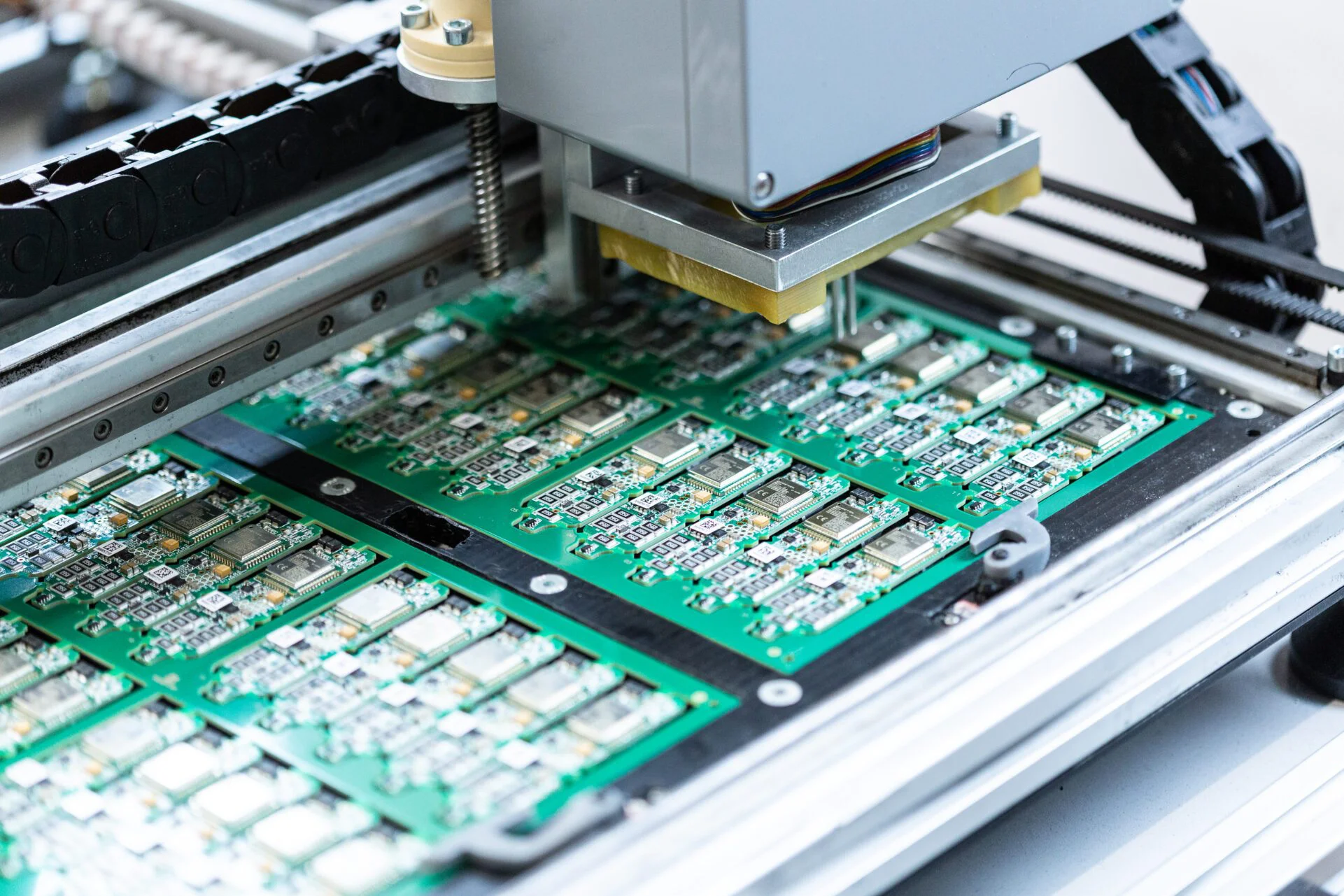
- A PCB assembly has a solder defect leading to overheating.
- Incorrect component specification is supplied to an OEM and causes a system failure.
Insurance that may respond
- Product Liability (PL): Covers injury or property damage to third parties caused by your product.
- Public Liability: Often packaged with PL; relevant if your operations cause third-party damage.
- Product Recall/Contaminated Product cover (where available): Helps with recall costs, notification, disposal, and sometimes loss of profits.
Key points to check
- Your policy wording around “damage to the product itself” vs damage caused by the product.
- Whether “financial loss” is excluded (many liability policies exclude pure financial loss unless added).
- Your territorial limits and jurisdiction (UK-only vs worldwide, USA/Canada inclusion).
2) Professional errors: design, specification and advice
Manufacturers often do more than “make to print”. You may advise on materials, tolerances, heat dissipation, compliance, or integration. If your advice/specification is wrong, the claim may be framed as negligence rather than product failure.
Typical loss scenarios
- A customer relies on your technical advice and suffers losses due to incorrect specification.
- A design change is implemented without proper validation.
Insurance that may respond
- Professional Indemnity (PI): Covers claims arising from professional services, design, specification, and advice.
Key points to check
- Ensure your PI includes the services you actually provide (design, consultancy, prototyping, testing).
- Look for cover for contractual liability where you’ve accepted tougher terms.
3) Fire, explosion and property damage
Electrical manufacturing sites face elevated fire risk: soldering stations, reflow ovens, conformal coating, solvents/cleaners, lithium battery handling (if applicable), dust, and high-value machinery running long hours.
Typical loss scenarios
- A reflow oven fault causes a fire and smoke damage across the production area.
- A small electrical fault leads to a larger incident overnight.
Insurance that may respond
- Commercial Property/Material Damage: Covers buildings, contents, stock, and machinery.
- Business Interruption (BI): Covers loss of gross profit and ongoing costs following insured damage.
Key points to check
- Adequate sums insured (rebuild costs, replacement-as-new machinery, stock values).
- BI indemnity period (often 12 months; many manufacturers need 18–24 months).
- Whether machinery breakdown is included or needs adding.
4) Machinery breakdown and production stoppage
Pick-and-place machines, AOI, X-ray inspection, CNC, injection moulding, test rigs, compressors, and extraction systems are expensive and can be single points of failure.
Typical loss scenarios
- A critical machine fails and parts lead times are weeks.
- A compressor failure stops multiple processes.
Insurance that may respond
- Engineering/Machinery Breakdown: Covers sudden and unforeseen breakdown.
- Engineering BI (if added): Covers loss of profit due to breakdown (not just fire/flood).
Key points to check
- Maintenance and inspection requirements.
- Whether cover includes electrical/mechanical breakdown and control system failures.
5) Supply chain disruption and component shortages
Even well-run manufacturers can be hit by supplier insolvency, shipping delays, geopolitical issues, or sudden obsolescence of key components.
Typical loss scenarios
- A sole-source supplier fails and you can’t fulfil a contract.
- A delayed shipment causes missed delivery milestones and penalties.
Insurance that may respond
- Business Interruption (limited): Usually only responds when disruption follows insured damage at your premises.
- Contingent BI/Supplier extension (if available): Can cover losses from damage at a named supplier/customer site.
- Marine Cargo/Transit: Covers goods in transit (imports/exports), including damage and sometimes delay-related options.
Key points to check
- Whether you can add named suppliers and how limits apply.
- Contract terms: penalties may be excluded unless specifically insured.
6) Cyber incidents and operational technology (OT) risk
Manufacturing is a prime target for ransomware. Even if you don’t hold “exciting” data, attackers want downtime leverage. ERP, CAD files, production schedules, and machine control systems are all valuable.
Typical loss scenarios
- Ransomware encrypts production systems and halts dispatch.
- A phishing attack leads to fraudulent supplier payment.
Insurance that may respond
- Cyber Insurance: Typically covers incident response, business interruption, data recovery, extortion, and third-party liability.
Key points to check
- Whether the policy covers system failure as well as malicious attacks.
- Waiting periods and how BI is calculated.
- Any security conditions (MFA, backups, patching) that must be met.
7) Employers’ Liability and workforce safety
Manufacturing sites have manual handling, repetitive strain, solder fumes, noise, moving machinery, and shift work. In the UK, Employers’ Liability (EL) is a legal requirement for most employers.
Typical loss scenarios
- An employee suffers an injury from machinery or a slip/trip.
- Occupational illness allegations linked to exposure.
Insurance that may respond
- Employers’ Liability: Covers injury/illness claims from employees.
Key points to check
- Accurate payroll and staff descriptions.
- Labour-only subcontractors and agency workers: confirm how they’re treated.
8) Environmental and pollution exposures
Cleaning agents, coatings, oils, and waste streams can create pollution risk — even from a “small” spill. Some contracts also require explicit pollution liability.
Typical loss scenarios
- A chemical spill enters drains and triggers clean-up costs.
- Waste disposal issues lead to allegations of contamination.
Insurance that may respond
- Pollution Liability (specialist): Covers sudden/accidental and sometimes gradual pollution, plus clean-up.
- Some PL policies provide limited sudden and accidental pollution cover, but it’s often restricted.
Key points to check
- Whether pollution is excluded entirely under your main liability policy.
- Your storage, bunding, COSHH controls, and waste contractor arrangements.
9) Contract risk: tough terms, warranties and indemnities
OEMs and Tier 1 customers often push strict terms: broad indemnities, fitness-for-purpose wording, liquidated damages, and extended warranty periods. These can create uninsured exposures if you accept liabilities beyond what your policy covers.
Insurance that may respond
- PI and Liability policies may respond, but only within their terms.
Key points to check
- Get contract reviews before signing; align insurance to the contract.
- Watch for “hold harmless” clauses and exclusions for liquidated damages.
10) Stock, goods in transit and storage risk
Electrical components can be high value and sensitive to moisture, ESD, temperature, and handling. A single incident can write off stock.
Typical loss scenarios
- Water leak damages packaged components.
- Theft of high-value stock.
- Transit damage to finished goods.
Insurance that may respond
- Property insurance: Stock at your premises.
- Goods in Transit/Marine Cargo: Stock and finished goods while moving.
Key points to check
- Security requirements (alarms, locks, CCTV) and compliance.
- Correct basis of valuation for stock (cost vs selling price).
11) Directors’ and officers’ exposures
If a major claim hits, or a contractual dispute escalates, directors can face allegations around governance, financial decisions, or regulatory compliance.
Insurance that may respond
- Directors’ & Officers’ (D&O): Covers directors and officers for certain management liability claims.
Key points to check
- Whether it includes employment practices, regulatory investigations, and legal costs.
How to build an insurance programme that actually works
Insurance is only as good as the information provided and the way the cover is structured. For electrical components manufacturers, a sensible approach is:
- Start with the basics: Property + BI, EL, PL/Product Liability.
- Add the manufacturing-specific layers: Machinery breakdown + engineering BI, PI (if you design/specify/advise), cyber, transit/marine cargo.
- Stress-test the numbers: sums insured, BI indemnity period, worst-case recall costs.
- Match contracts to cover: don’t accept liabilities you can’t insure.
Quick checklist before renewal
- Have you introduced new products, materials, or markets (EU/USA)?
- Any changes to turnover split by product/territory?
- Any new design or consultancy services?
- Any single points of failure in machinery or suppliers?
- Are your stock values and lead times higher than last year?
- Have you updated cyber controls (MFA, backups, patching)?
Final thought
Electrical components manufacturing is a high-responsibility sector — but it’s not uninsurable. The key is mapping your real-world risks to the right policies, then tightening the details: limits, exclusions, territories, and contract terms.
If you want, tell me what you manufacture (e.g., PCB assemblies, connectors, sensors, power electronics), your main customer types, and whether you export. I can tailor the structure and the CTA for your site, and suggest the most relevant cover sections to highlight.


 My Account