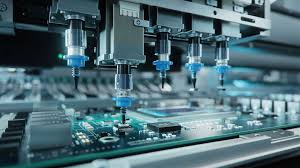
The Future of Electronics Manufacturing: AI, Automation & Risk Exposure

The Future of Electronics Manufacturing: AI, Automation & Risk Exposure

CALL FOR EXPERT ADVICE
GET A QUOTE NOW
CALL FOR EXPERT ADVICE
GET A QUOTE NOW

The Future of Electronics Manufacturing: AI, Automation & Risk Exposure

Introduction

Electronics manufacturing is moving fast. Demand for smarter devices, shorter product cycles and tighter margins is pushing factories towards AI-driven planning, robotics, connected machines and more outsourced, global supply chains. The upside is clear: better quality, less waste, faster throughput and improved traceability.

But the same changes also reshape risk. When production depends on software, data and automated equipment, a fault can scale quickly—turning a small defect into a large recall, or a short outage into a major business interruption event. For UK manufacturers, these risks sit alongside familiar obligations: product safety, quality management, contractual performance, and compliance expectations.

This guide covers what’s changing, where the biggest exposures are emerging, and the practical steps electronics manufacturers can take to stay resilient.

1) What “the future” looks like on the factory floor

AI and automation in electronics manufacturing isn’t one single technology. It’s a stack of changes that connect design, procurement, production, testing, warehousing and after-sales support.

Key shifts you’ll see more of:

  • AI-assisted production planning: forecasting demand, optimising batch sizes, scheduling maintenance and balancing lines.
  • Robotics and cobots: handling pick-and-place, soldering support, packaging, palletising and repetitive inspection tasks.
  • Machine vision quality control: automated inspection for solder joints, component placement, surface defects and labelling.
  • Industrial IoT (IIoT): sensors and connected machinery feeding live performance and quality data.
  • Digital twins: virtual models of lines and processes used to test changes before deploying them.
  • Additive manufacturing for tooling and prototypes: faster iteration and reduced lead times.
  • More software in products: firmware updates, connectivity and remote diagnostics becoming standard.

These improvements can reduce certain risks (manual handling injuries, inconsistent inspection, rework), but they also create new dependencies.

2) How AI and automation change risk exposure

When a factory becomes more automated, risk becomes more “systemic”. Instead of a single operator mistake affecting one unit, a software error, wrong dataset or misconfigured robot can affect thousands of units before anyone notices.

The main risk pattern to watch is speed + scale:

  • AI can make decisions faster than humans, which is great—until it’s wrong.
  • Automation can produce at scale, which is great—until it’s producing defects at scale.
  • Connected systems can share data instantly, which is great—until the wrong data spreads.

That means risk management needs to focus less on isolated incidents and more on controls that detect issues early and prevent them from propagating.

3) Cyber risk: the factory is now a target

Electronics manufacturers are increasingly attractive to cyber criminals. Why? Because downtime is expensive, and because manufacturers hold valuable IP, designs, supplier data and customer contracts.

Common cyber scenarios in modern plants:

  • Ransomware that locks production systems, ERP, MES or even quality records.
  • Compromised remote access used for maintenance of machines and PLCs.
  • Phishing and credential theft leading to invoice fraud or supplier payment diversion.
  • Supply chain compromise where a trusted vendor’s software update introduces malware.
  • Data integrity attacks where production parameters are subtly changed to cause defects.

Practical controls to reduce exposure:

  • Segment OT (operational technology) from IT networks; limit “flat networks”.
  • Enforce MFA, especially for remote access and admin accounts.
  • Maintain offline backups and test restore processes.
  • Patch management with clear ownership (including vendor-managed systems).
  • Logging and monitoring that covers OT where possible.
  • Incident response plans that include safety, quality and customer communication.

Cyber is not just about data. In manufacturing, it’s often about availability (keeping the plant running) and integrity (ensuring the product is built correctly).

4) Product liability and recall: software-driven defects

Electronics products are increasingly complex: more components, more firmware, more connectivity and more third-party modules. That can widen the causes of failure.

Typical electronics manufacturing product risk drivers:

  • Component substitution due to shortages (even “equivalent” parts can behave differently).
  • Firmware bugs that only appear under certain conditions.
  • Battery and thermal risks (overheating, swelling, fire risk).
  • EMC/EMI issues that cause interference or failure in the field.
  • Incorrect labelling or documentation (warnings, instructions, compliance marks).
  • Counterfeit components entering the supply chain.

The challenge with AI-enabled quality is that it can be excellent at spotting known defects, but weaker at spotting novel failure modes—especially if training data is limited.

Practical steps:

  • Tighten change control for BOM changes and component substitutions.
  • Use traceability down to lot/batch level where feasible.
  • Expand test coverage for edge cases and real-world environments.
  • Maintain clear recall and field action procedures.
  • Document decisions: why a part was substituted, what testing was done, and who approved it.

5) Business interruption: downtime is more expensive than ever

Automation often increases throughput and reduces buffers. That’s efficient—but it can make downtime more painful.

Common interruption triggers:

  • A single critical robot, oven, reflow line or test station failure.
  • Software outages in MES/ERP/WMS systems.
  • Cyber incidents.
  • Utility failures (power quality issues can be particularly disruptive).
  • Supplier delays for critical components.

Mitigation ideas:

  • Identify your “single points of failure” and build redundancy where it matters.
  • Keep critical spares and service contracts aligned with lead times.
  • Consider dual-sourcing for high-risk components.
  • Build realistic recovery time objectives (RTOs) for both IT and OT.
  • Run tabletop exercises: “What do we do if the line is down for 72 hours?”

Business interruption isn’t only lost revenue. It can include contractual penalties, expedited shipping, overtime, scrap, and reputational damage.

6) Supply chain risk: visibility, compliance and concentration

Electronics manufacturing relies on a deep supply chain: semiconductors, PCBs, connectors, plastics, packaging, logistics and specialist testing.

Emerging supply chain exposures:

  • Concentration risk: one supplier for a critical IC or PCB.
  • Geopolitical disruption: delays, export controls, shipping issues.
  • Quality drift: supplier process changes that affect performance.
  • Counterfeit risk: especially in constrained markets.
  • Contract risk: unclear liability for delays, defects or rework.

Practical steps:

  • Map your tier-1 suppliers and identify “no substitute” parts.
  • Build supplier scorecards that include quality, delivery and security.
  • Audit traceability and authenticity controls for high-risk components.
  • Review contracts: warranties, limitation of liability, lead times, and acceptance criteria.

7) People risk: skills, training and human factors

Automation doesn’t remove people from the equation—it changes what people do.

New people-related risks include:

  • Skills gaps in robotics, data, OT security and AI model oversight.
  • Over-reliance on automation where operators stop challenging outputs.
  • Training risk when new lines go live quickly without stable procedures.
  • Key person dependency on one engineer or vendor.

Practical steps:

  • Create role-based training for operators, engineers and managers.
  • Keep manual “fallback” procedures documented and tested.
  • Use clear escalation rules: when to stop the line, quarantine stock, and notify customers.

8) Compliance and governance: proving you are in control

Customers, regulators and auditors increasingly expect evidence: traceability, documented processes, and clear accountability.

Good governance doesn’t have to be heavy. It’s about being able to answer:

  • What changed?
  • Who approved it?
  • What testing was done?
  • What data supports the decision?
  • How quickly can we find affected units?

If you can answer those questions quickly, you reduce the cost and duration of incidents.

9) Insurance implications: what to review as risk evolves

As risk shifts, it’s worth reviewing whether your insurance programme still matches your operations.

Areas electronics manufacturers often review:

  • Product liability: limits, territories, and any exclusions for certain products or markets.
  • Product recall/contaminated products style covers (where applicable): costs of recall, notification, disposal and replacement.
  • Professional indemnity/technology E&O: if you design firmware, provide advice, or supply integrated systems.
  • Cyber insurance: ransomware response, business interruption, incident response costs and third-party liability.
  • Property and business interruption: sums insured, indemnity period, and coverage for critical machinery.
  • Goods in transit and stock: including high-value components.
  • Employers’ liability and health & safety: especially where robotics and machinery are involved.

Insurance won’t fix weak processes, but it can protect cashflow when something goes wrong—particularly for recalls, cyber events and extended downtime.

10) A practical 90-day action plan

If you want a simple way to move from “aware” to “prepared”, focus on the next 90 days.

  1. Map your critical dependencies
  • Top 10 machines/systems that would stop production.
  • Top 10 components with no easy substitute.
  1. Improve traceability
  • Batch/lot tracking for components and finished goods.
  • Clear quarantine and rework processes.
  1. Run one cyber + downtime exercise
  • Include IT, engineering, production, quality and leadership.
  • Decide who can stop the line and who speaks to customers.
  1. Tighten change control
  • BOM changes, firmware releases, supplier substitutions.
  • Document approvals and testing.
  1. Review contracts and insurance
  • Check liability caps, warranties, and delivery obligations.
  • Make sure cover matches your current products and processes.

Conclusion

AI and automation will keep pushing electronics manufacturing towards higher speed, higher precision and tighter integration between systems. The winners will be the firms that combine innovation with control: strong traceability, disciplined change management, resilient cyber practices and realistic continuity planning.

If you manufacture electronics in the UK and want to sense-check your risk exposure—cyber, product liability, supply chain or business interruption—Insure24 can help you review your cover and identify practical improvements that reduce the chance and cost of incidents.

Call to action

Want a quick review of your current manufacturing risk profile and insurance programme? Call 0330 127 2333 or visit insure24.co.uk to speak with a specialist.

Related Blogs