

 My Account

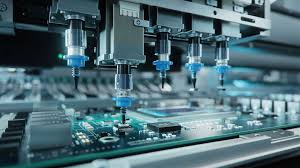
How to Reduce Electronics Manufacturing Insurance Premiums (UK Guide)
Introduction
Electronics manufacturing can look “high risk” to insurers: complex supply chains, expensive equipment, product liability exposures, fire risk from processes…
Technology manufacturers sit in a high-risk middle ground: you’re not “just” an office-based tech firm, and you’re not “just” a factory. You often run connected production lines, hold valuable IP, rely on specialist suppliers, and ship products that may include software, firmware, or cloud services. That mix creates cyber exposures that can quickly become operational, contractual, and regulatory.
Cyber insurance is designed to help you respond to incidents (the immediate “what do we do now?”) and to protect your balance sheet (the “how much will this cost?”). The right policy can fund expert support, reduce downtime, and cover liabilities to customers and third parties.
Cyber incidents in manufacturing often start with something small and become expensive fast. Common scenarios include:
The key point: cyber losses can be physical-world losses (stopped lines, spoiled stock, missed delivery windows), not only “IT costs”.
Cyber policies vary widely. Don’t assume “cyber insurance” means the same thing across insurers. A strong policy for technology manufacturers usually includes the sections below.
This is often the most valuable part of the policy because it brings specialists in quickly.
Look for cover for:
Practical tip: ask whether you must use the insurer’s panel vendors, and how quickly they can be deployed.
For manufacturers, BI is often the make-or-break section.
Check:
Also ask about dependent business interruption (sometimes called contingent BI): losses caused by an incident at a key supplier, cloud provider, or outsourced IT partner.
Most policies include extortion cover, but the detail matters.
Look for:
Be aware: insurers will expect strong controls (MFA, backups, patching). Weak controls can lead to higher premiums, exclusions, or declined claims.
If you hold personal data (employees, customers, prospects), you have UK GDPR obligations.
A suitable policy may cover:
Cyber insurance is not a substitute for compliance, but it can fund the response.
This can cover claims that your systems caused harm to others, for example:
For technology manufacturers, this is especially relevant if you ship connected devices, provide remote monitoring, or push firmware updates.
This covers costs to restore or recreate data and software.
Check whether it includes:
Many manufacturers are hit by invoice fraud and payment diversion.
Ask whether the policy includes:
These are sometimes optional extensions or have lower sub-limits.
Cyber policies have exclusions. The goal is to understand them and manage them.
Common issues include:
If your biggest fear is production stoppage, focus on BI wording, waiting periods, and whether OT-related disruption is treated as covered “system failure”.
There’s no one-size-fits-all. A practical way to size limits is to estimate your worst credible loss across a few buckets:
Then stress-test: what if you’re down for 3 days? 7 days? 14 days? Many firms underestimate how long recovery takes once you include forensics, clean rebuilds, and validation.
Underwriting for cyber has tightened. Expect questions about:
Preparing clear answers can reduce premium and improve terms. If you’re unsure, document what you do have and what you’re improving over the next 90 days.
Insurers like controls that reduce both frequency and severity. The following are often high-impact:
Even small improvements can change underwriting outcomes.
If you suspect an incident:
The faster you involve the right experts, the lower the total cost tends to be.
When comparing quotes, ask:
Cyber insurance works best when it’s paired with sensible controls and a clear incident plan. For technology manufacturers, the priority is usually protecting production uptime, safeguarding IP, and managing contractual risk with customers and suppliers.
If you want a quote that fits your operation, be ready to share your turnover, key systems (including OT), remote access setup, backup approach, and your best estimate of downtime cost per day. That information helps place cover that actually responds when it matters.
Electronics manufacturing can look “high risk” to insurers: complex supply chains, expensive equipment, product liability exposures, fire risk from processes…
Electronics and technology manufacturing is a high-opportunity sector, but it’s also high-pressure. Tight margins, complex supply chains, strict …
Electronics manufacturing is moving fast. Demand for smarter devices, shorter product cycles and tighter margins is pushing factories towards AI-driven planning, r…
Technology manufacturers sit in a high-risk middle ground: you’re not “just” an office-based tech firm, and you&rsq…