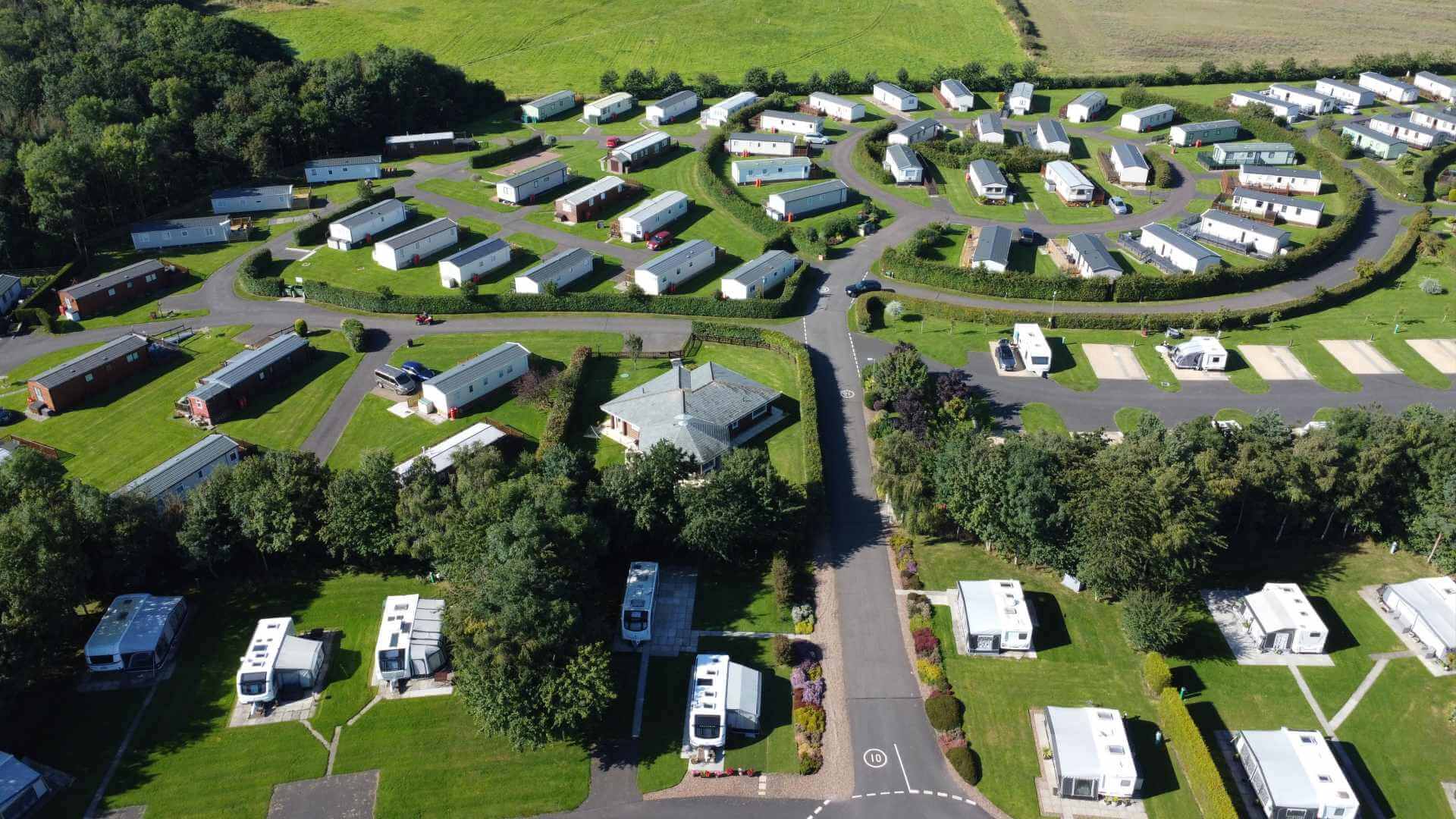
Caravan Park Tree Management & Falling Branch Liability (UK)
Introduction: why trees are a caravan park risk (and asset)
Trees are one of the best parts of a caravan park. They provide shade, privacy, wind protection and that “get away from it all” feel guests pay for. They can also be one of the biggest sources of unexpected claims.
A falling limb can injure a guest, damage a caravan, crush an awning, take out a power line or block an access road. Even when nobody is hurt, the disruption can be costly: emergency call-outs, refunds, reputational damage and a liability dispute that drags on.
The good news: most tree-related incidents are preventable with a sensible, documented management plan. This guide covers what caravan park owners and managers need to know in the UK about their duty of care, practical tree management, and how liability tends to be assessed when branches fall.
What “liability” means when a branch falls
In simple terms, liability is about whether you (as the park operator/landowner/occupier) failed to take reasonable steps to keep people safe.
When a branch falls and causes injury or damage, the key questions are usually:
-
Was the tree on your land (or under your control)?
-
Was the risk foreseeable? (e.g., visible decay, deadwood, obvious defects, repeated complaints)
-
Did you have a reasonable inspection and maintenance regime?
-
Were actions taken and recorded? (works ordered, areas cordoned off, warning signs used appropriately)
-
Did extreme weather make it unavoidable? (and even then, what was your preparation?)
If you can show you had a proportionate system in place and acted on findings, you’re in a much stronger position.
Your legal duties as a caravan park operator (UK)
Caravan parks sit at the intersection of several duties because you’re responsible for a site where the public stays, often with children, and where vehicles and structures are densely placed.
Occupiers’ Liability: visitors and non-visitors
As the occupier of the land, you owe a duty to take reasonable care to ensure visitors are reasonably safe when using the premises for the purpose they are permitted to be there. In practice, that includes maintaining the grounds so that obvious hazards (like dangerous trees) are identified and managed.
You may also owe a duty to people who are not “visitors” in the traditional sense (for example, trespassers), depending on circumstances.
Health and safety duties
If you have employees, you also have duties to protect staff and contractors working on site. Tree work itself is high risk, so your contractor management matters: competence, method statements, and safe working areas.
Negligence and “reasonable foreseeability”
Most tree claims turn on negligence principles: would a reasonable park operator have spotted the problem and acted? You are not expected to eliminate all risk, but you are expected to manage it sensibly.
Nuisance and neighbouring property
If trees on your land damage neighbouring property (for example, a branch falls onto a neighbouring road or property), claims can arise through nuisance or negligence. Boundary trees and overhanging limbs are common flashpoints.
Common scenarios that lead to claims
Tree incidents are rarely “out of the blue”. The patterns that often show up in claims files include:
-
Deadwood over pitches or roads that was visible for months.
-
Leaning trees after storms that were not reassessed.
-
Decay at the base (fungal brackets, cavities, soft wood) ignored.
-
Previous branch failures from the same tree or group.
-
Poor pruning (topping, lion-tailing, incorrect cuts) that weakens structure.
-
Inadequate species choice near high-occupancy areas.
-
No records of inspections or works.
-
Informal “drive-by checks” with no training and no schedule.
If you recognise any of these, you’re not alone—but it’s a sign to tighten up your system.
What “reasonable” tree management looks like
There is no one-size-fits-all schedule. A small, low-occupancy park with a handful of young trees will not need the same regime as a large holiday park with mature trees over pitches, play areas and internal roads.
That said, “reasonable” usually includes the following.
1) A written tree management policy
This doesn’t need to be long. It should set out:
-
Who is responsible for tree safety decisions
-
How often inspections happen
-
What triggers extra inspections (storms, complaints, visible defects)
-
How findings are recorded
-
How works are prioritised (urgent vs routine)
-
How you manage high-risk zones (play areas, reception, roads, pitches)
2) A tree inventory (even a simple one)
For parks with more than a few trees, create an inventory that identifies:
-
Tree location (map reference or pitch number)
-
Species (if known)
-
Approximate size/age class
-
Notes on targets beneath (pitches, footpaths, power lines)
-
Inspection dates and findings
A basic spreadsheet is fine. The point is traceability.
3) Risk-based inspections
A sensible approach is:
-
Routine visual checks by trained staff (e.g., monthly/quarterly) focusing on obvious changes.
-
Formal inspections by a competent person (often annually, or more frequently in high-risk areas).
-
Post-event inspections after significant storms, high winds, heavy snow or prolonged drought.
“Competent” matters. If you’re relying on staff, ensure they have appropriate training for basic tree hazard awareness and know when to escalate to an arborist.
4) Prioritising high-occupancy and high-target areas
Not all trees carry the same risk. Focus effort where the consequence is highest:
-
Pitches and hardstandings
-
Playgrounds and seating areas
-
Reception, shop, amenities blocks
-
Internal roads, car parks, footpaths
-
Areas near overhead lines
5) Clear action thresholds
Your policy should define what happens when you spot:
-
Dead branches over targets
-
Cracks, splits, hanging limbs
-
Significant lean or root plate movement
-
Cavities, decay, fungal fruiting bodies
-
Soil heave, undermining, waterlogging
Some issues require immediate cordoning off and urgent works.
6) Using competent contractors (and controlling the work)
Tree work is not the place to cut corners. Use reputable arborists with:
-
Evidence of competence and relevant qualifications
-
Adequate public liability insurance
-
Safe systems of work (risk assessments/method statements)
-
Proper waste disposal and site protection
Also consider how you manage the work on a live park: keeping guests away, signage, and timing works outside peak occupancy.
7) Record-keeping: your best defence
If a claim lands, records are often the difference between a clean outcome and a long dispute.
Keep:
-
Inspection logs (date, inspector, areas covered, findings)
-
Photos of defects and completed works n- Quotes, work orders and invoices
-
Communications (guest reports, staff reports)
-
Storm logs (date, forecast warnings, actions taken)
If it’s not written down, it’s hard to prove it happened.
Understanding tree hazards: what to look for (non-arborist guide)
You don’t need to be an arborist to spot “red flags” that should trigger a professional inspection.
Canopy and branches
-
Deadwood (no buds/leaves in season)
-
Hanging branches or partially failed limbs
-
Excessive end-weight on long limbs over pitches
-
Previous pruning wounds that have decayed
Trunk
-
Cracks, splits, fresh sap bleeding
-
Cavities or hollowing
-
Fungal brackets (a sign of decay)
-
Loose bark, large areas of dead cambium
Roots and ground
-
Soil heave or cracking around the base
-
Exposed roots from erosion
-
Waterlogged ground reducing root stability
-
Construction damage (trenches, resurfacing, services)
External factors
-
Trees close to overhead lines
-
Trees affected by vehicles compacting soil
-
Trees in drought stress (increasing limb drop risk in some species)
If you see any of these in a high-target area, treat it as a priority.
Weather events: storms, “acts of God” and what insurers look for
A common assumption is that if a branch falls in a storm, it’s automatically an “act of God” and nobody is liable. In reality, storms don’t automatically remove responsibility.
Insurers and claimants will often ask:
-
Was the tree already defective?
-
Were there prior warnings or visible signs?
-
Did you have a reasonable inspection regime?
-
Did you respond appropriately to weather alerts?
If you can demonstrate a robust system and prompt post-storm checks, you’re better placed to defend a liability claim.
Managing guest expectations without relying on “disclaimers”
Some parks put up signs like “Park at your own risk” or “We are not responsible for damage caused by falling branches.” These may help communicate that nature carries some risk, but they are not a substitute for proper management.
If a hazard was foreseeable and you failed to act reasonably, a sign is unlikely to protect you.
A better approach:
-
Provide clear reporting routes (“If you notice a damaged tree or hanging branch, please tell reception immediately.”)
-
Use temporary exclusion zones when needed
-
Communicate planned tree works and why they’re happening
Practical tree management plan for caravan parks
Here’s a straightforward framework you can adapt.
Step 1: Map your “tree risk zones”
Create a simple site map and mark:
-
High-occupancy areas
-
High-value targets (static caravans, amenity blocks)
-
Critical access routes (fire access, emergency routes)
-
Known problem trees
Step 2: Set inspection frequencies
Example (adjust to your site):
-
High-risk zones: formal inspection every 6–12 months
-
Medium-risk zones: formal inspection every 12–24 months
-
Low-risk zones: periodic checks, and after storms
Step 3: Create a defect-to-action matrix
For example:
-
Immediate action (same day): hanging limb over pitch/road, major crack, significant root movement
-
Urgent (within 7–14 days): deadwood over targets, decay indicators in high-risk areas
-
Routine (planned): crown lifting for access, thinning where appropriate, cyclical pruning
Step 4: Contractor plan
Have a pre-vetted arborist ready so you’re not scrambling after an incident.
Step 5: Documentation
Keep everything in one place (digital folder) so it’s easy to produce if needed.
Insurance: what cover should caravan parks consider?
Tree incidents can trigger multiple policies depending on what happened.
Public liability
If a guest or member of the public is injured, or their property is damaged due to alleged negligence, public liability is usually the core cover.
Employers’ liability
If a staff member is injured (including during inspections or while assisting contractors), employers’ liability may respond.
Property and business interruption
If a tree damages your buildings, amenities blocks, signage, or causes closure of parts of the park, your property cover and business interruption may come into play.
Motor and caravan-related considerations
Damage to guest vehicles or caravans can be contentious. Clear incident handling, documentation and prompt insurer notification help.
Contractor liability
If a contractor’s work causes a failure (e.g., poor pruning leading to later collapse), their insurance may be relevant—but you may still face a claim as the site operator.
What to do immediately after a falling branch incident
How you respond in the first hour matters.
-
Make the area safe: cordon off, stop access, consider wider exclusion if the tree is unstable.
-
Check for injuries and call emergency services if needed.
-
Preserve evidence: take photos from multiple angles, note weather conditions, keep the failed limb if safe.
-
Record witness details: staff and guests.
-
Log the tree ID/location (from your inventory) and pull inspection history.
-
Arrange an urgent arborist assessment to prevent secondary incidents.
-
Notify your insurer promptly and follow their guidance.
-
Communicate calmly with guests: safety first, clear next steps.
Avoid admitting liability on the spot. Focus on care and facts.
Reducing claims risk: simple upgrades that pay off
If you want quick wins, start here:
-
Train a member of staff in basic tree hazard awareness
-
Create a simple tree register and inspection log
-
Prioritise deadwood removal over pitches and paths
-
Add post-storm checks to your operating routine
-
Keep photos and records in a single folder
-
Review pitch layout: avoid placing high-value targets under mature canopies where possible
FAQs: caravan park tree liability and management
Are caravan parks legally responsible for falling branches?
Not automatically. Responsibility depends on whether you took reasonable steps to identify and manage foreseeable risks.
How often should trees be inspected on a caravan park?
It depends on tree condition, occupancy and targets. High-risk areas may justify annual (or more frequent) formal inspections, plus post-storm checks.
Do I need a qualified arborist for inspections?
For formal inspections and higher-risk decisions, a competent arborist is strongly recommended. Staff can support with routine visual checks if trained.
Can I rely on warning signs to avoid liability?
Signs can help inform guests, but they don’t replace a reasonable inspection and maintenance regime.
What records should I keep?
Inspection logs, photos, work orders/invoices, contractor details, and storm response notes are a strong baseline.
What if a branch falls during extreme weather?
Extreme weather may reduce liability, but it doesn’t remove the need for reasonable preparation and a sensible inspection regime.
Call to action
If you run a caravan park, tree management is one of the most practical ways to reduce injury risk, protect guest property and avoid expensive disputes.
If you’d like, we can help you review your current insurance and liability cover, and make sure your policy wording matches the real risks on your site—especially public liability, property damage and business interruption.
Speak to Insure24 to discuss caravan park insurance and risk management, or request a quote today.


 My Account