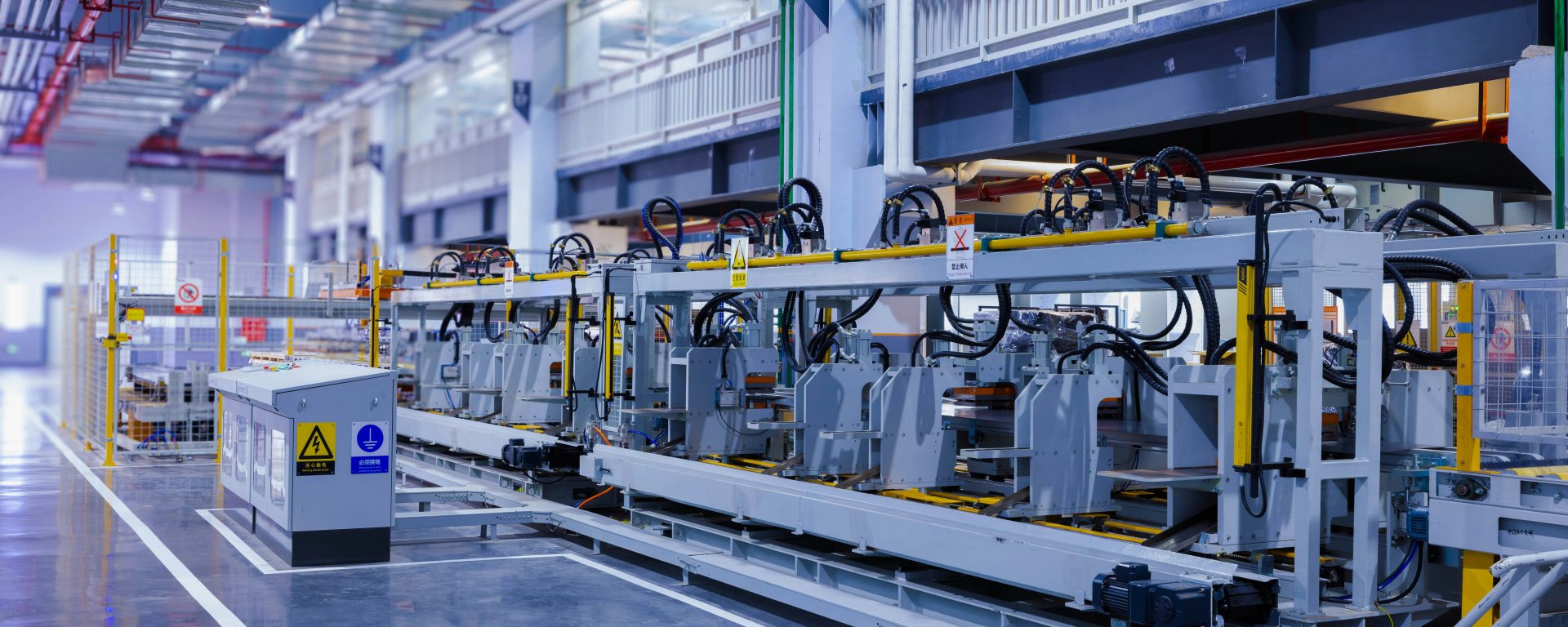
Smart manufacturing (often called Industry 4.0) is changing how aerospace facilities operate. Robotics, automated inspection, connected machinery, digital twins, additive manufacturing, and real-time data analytics can improve quality and throughput—but they also change the risk profile of the site.
If you run an aerospace manufacturing facility (or supply into the sector), your insurance needs to keep pace with how you actually work today: connected production lines, high-value plant, strict quality controls, complex contracts, and a supply chain where one issue can ripple fast.
This guide explains the key risks in smart manufacturing aerospace facilities and the types of insurance cover UK businesses typically consider—so you can sense-check your programme and avoid gaps.
What counts as “smart manufacturing” in aerospace facilities?
In aerospace, “smart manufacturing” usually means a facility that uses connected systems to plan, produce, inspect, and trace components—often with a high degree of automation. Common examples include:
- Robotic machining, drilling, fastening, and composite layup
- IoT sensors monitoring vibration, temperature, humidity, and machine performance
- Automated non-destructive testing (NDT) and machine vision inspection
- Manufacturing execution systems (MES) integrated with ERP and quality systems
- Digital twins and simulation to optimise production and maintenance
- Additive manufacturing (3D printing) for tooling, prototypes, or end-use parts
- Connected supply chain and traceability systems (serialisation, batch tracking)
These technologies can reduce waste and improve compliance—but they can also introduce new failure modes, new dependencies, and new liabilities.
Why aerospace smart manufacturing changes your insurance risk
Traditional manufacturing risks still exist (fire, flood, machinery breakdown, injury, defective products). The difference is that smart manufacturing can make losses:
- Faster (automation can produce more units before a defect is detected)
- Broader (connected systems can spread disruption across multiple lines or sites)
- Harder to isolate (IT/OT integration blurs where “cyber” ends and “engineering” begins)
- More expensive (high-value CNC, robotics, clean rooms, composites equipment, specialist calibration)
- More contractual (penalties, warranties, flow-down terms, and quality clauses)
That’s why aerospace manufacturing insurance is rarely “one policy solves all”. It’s usually a joined-up programme built around your site, your processes, and your contract obligations.
Core covers for smart manufacturing aerospace facilities
1) Property damage (buildings, contents, stock)
Aerospace facilities often hold high-value plant and sensitive stock. Property insurance is typically the foundation, covering physical loss or damage to buildings, machinery, tooling, fixtures, and stock (subject to policy terms).
Smart manufacturing adds considerations such as:
- High-value robotics and CNC equipment with long lead times
- Specialist environments (temperature/humidity control, dust extraction, clean areas)
- Critical utilities (compressed air, power conditioning, cooling systems)
- Tooling and jigs that may be bespoke and hard to replace
Key questions to sense-check:
- Are sums insured and declared values up to date (including new automation)?
- Is stock insured on the right basis (raw materials, WIP, finished goods)?
- Do you have cover for customers’ goods or tooling on site (if applicable)?
- Are you covered for damage caused by insured perils to control systems that run production?
2) Business interruption (BI) / loss of gross profit
In aerospace, downtime can be brutal. A single incident can stop production, delay deliveries, and trigger contractual pressure. Business interruption insurance is designed to protect your gross profit (or revenue/standing charges) following insured property damage—again, subject to policy terms.
Smart manufacturing makes BI planning more complex because:
- Replacement parts for robotics and CNC can take months
- Commissioning and calibration can extend recovery time
- Software configuration and validation can be a bottleneck
- Single points of failure (one line, one cell, one server) can halt output
What to review:
- Indemnity period: is it long enough for realistic rebuild + recommissioning?
- Increased cost of working: can you outsource, run extra shifts, or use alternative sites?
- Supplier/customer extensions: are key dependencies included where available?
3) Machinery breakdown / engineering insurance
Smart aerospace facilities rely on complex machinery: CNC, autoclaves, ovens, compressors, robotics, inspection equipment, and more. Machinery breakdown (often under engineering insurance) can cover sudden and unforeseen mechanical or electrical breakdown, and may be arranged with associated BI (engineering BI) depending on the insurer and wording.
Why it matters in smart manufacturing:
- Automation increases reliance on fewer, more complex assets
- Breakdowns can cause secondary damage (tooling, workpieces, fixtures)
- Specialist engineers and parts can be scarce
Common discussion points:
- Do you need cover for electrical/mechanical breakdown beyond standard property perils?
- Is deterioration of stock relevant (e.g., temperature-controlled materials)?
- Do you have inspection requirements for certain plant (e.g., pressure systems)?
4) Cyber insurance (IT + OT realities)
Cyber risk isn’t just about stolen data anymore. In a connected aerospace facility, a cyber incident can disrupt operations, corrupt production data, or impact quality systems. Cyber insurance can help with incident response, forensic support, business interruption (where covered), and liability—depending on the policy.
Smart manufacturing cyber scenarios include:
- Ransomware taking down MES/ERP and halting production scheduling
- Compromised credentials affecting remote access to OT environments
- Data integrity issues in quality records, traceability, or calibration logs
- Supplier compromise impacting shared portals or file transfers
Practical questions:
- Does your cyber policy contemplate operational disruption (not just data breach)?
- Are OT systems and production networks within scope?
- Do you have offline backups and tested recovery plans?
5) Employers’ liability (EL)
Employers’ liability is legally required in most UK cases, and it’s particularly important in aerospace manufacturing where there may be machining hazards, manual handling, noise, dust/fumes, chemicals, and high-energy equipment.
Smart manufacturing doesn’t remove people from risk—it changes it. Consider:
- Human-robot interaction and guarding/safety systems
- Maintenance and lockout/tagout procedures
- Training for automated cells and new equipment
6) Public and products liability (PL/Products)
If your products or work cause injury or property damage to third parties, public and products liability insurance may respond (subject to policy terms). For aerospace suppliers, products liability is often a major focus because defects can have high downstream consequences.
Smart manufacturing can increase exposure if:
- A software/configuration issue causes systematic defects
- Inspection data is corrupted or incomplete
- Traceability gaps make it hard to isolate affected batches
Also watch for:
- Contractual requirements (limits, additional insureds, specific wording)
- Territories/jurisdiction (UK-only vs worldwide exports)
- Work away (installation, commissioning, or on-site support at customer premises)
7) Product recall / rectification (where relevant)
Not every manufacturer needs recall cover, but in aerospace supply chains, the cost of withdrawing, inspecting, reworking, or replacing parts can be significant—especially if you need to trace affected units across multiple customers and time periods.
Recall/rectification insurance (where available) can help with costs associated with a recall event, depending on the trigger and wording. It’s often discussed alongside quality systems, traceability, and contractual obligations.
8) Professional indemnity (PI) for design, specification, and advice
Many aerospace manufacturers do more than “make to print”. If you provide design input, engineering advice, testing services, certification support, or specifications, professional indemnity insurance may be relevant. PI is typically about financial loss arising from negligence in professional services (subject to terms).
Smart manufacturing can increase PI exposure when:
- Digital models, simulations, or process parameters are relied upon by customers
- Automation programming and process validation are part of the deliverable
- Quality documentation and compliance statements are critical
9) Directors’ & officers’ (D&O) and management liability
For growing aerospace businesses, management liability can be worth discussing—particularly where there are investors, complex contracts, regulatory expectations, or employment-related risks.
10) Commercial legal expenses
Legal expenses cover can support with certain legal disputes (subject to cover). In aerospace supply chains, disputes can arise around contracts, late delivery, quality issues, and employment matters.
Smart manufacturing risk hotspots insurers will ask about
If you’re arranging or renewing manufacturing insurance for an aerospace facility, expect questions around:
- Fire protection: detection, suppression, compartmentation, hot works controls
- Composite materials: dust control, extraction, storage, resin handling
- Machinery maintenance: planned maintenance, condition monitoring, critical spares
- Quality systems: inspection, calibration, traceability, non-conformance handling
- Cyber hygiene: MFA, patching, segmentation, backups, incident response
- Supply chain resilience: single-source suppliers, lead times, alternative production options
- Contracts: flow-down terms, liability caps, warranties, penalties, jurisdiction
Common insurance gaps in aerospace smart manufacturing
Here are gaps we often see when businesses modernise operations but don’t update insurance accordingly:
- Underinsured plant after automation upgrades
- BI indemnity period too short for real-world replacement and commissioning
- Cyber cover not aligned with OT disruption scenarios
- Products liability limits not matching contractual requirements
- Overseas exposure not reflected in territories/jurisdiction
- Tooling/customers’ goods not properly declared
- Design/advice work not captured (PI needed, or scope clarified)
How to choose the right aerospace manufacturing insurance approach
There isn’t a one-size-fits-all policy. A practical approach is to map your facility and operations, then build cover around your biggest loss scenarios.
Start with these steps:
- List critical assets: key machines, robotics cells, inspection equipment, servers, tooling.
- Identify single points of failure: one machine, one supplier, one system that stops output.
- Review contracts: required limits, indemnities, additional insureds, and territories.
- Check recovery timelines: how long to replace, install, validate, and restart production?
- Align cyber and engineering: ensure IT/OT realities are reflected in cover and controls.
Done properly, you’re not just buying insurance—you’re reducing the chance of a claim and improving how quickly you can recover if something goes wrong.
Talk to a UK broker who understands aerospace and connected manufacturing
If you operate a smart manufacturing aerospace facility—or supply into aerospace and want to sense-check your cover—Insure24 can help you review your risks and arrange a programme that fits your operations and contracts.
Call us on 0330 127 2333 or visit insure24.co.uk to discuss aerospace manufacturing insurance.
FAQs: Smart manufacturing aerospace facilities insurance
Do I need cyber insurance if I already have strong IT?
Even strong IT doesn’t remove the risk of disruption or data integrity issues. Cyber insurance can support incident response and recovery costs, depending on the policy and the event.
Is machinery breakdown included in standard property insurance?
Often, standard property cover focuses on insured perils like fire or flood. Machinery breakdown is typically arranged separately under engineering insurance, though structures vary by insurer.
How much BI cover do aerospace facilities need?
It depends on your gross profit, dependencies, and realistic recovery time. Smart manufacturing often needs longer indemnity periods due to specialist equipment lead times and commissioning.
What if we do both manufacturing and design?
If you provide design, specification, or engineering advice, professional indemnity may be relevant alongside products liability—because the nature of the claim can differ.
We export components—does that change anything?
Yes. Territories, jurisdiction, and contractual requirements can change the type and limit of liability cover you need. It’s worth reviewing this at renewal, especially if exports have increased.
Disclaimer: This article is for general information and does not constitute advice. Cover depends on insurer terms, conditions, exclusions, and underwriting information.


 My Account